

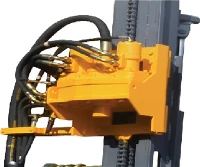
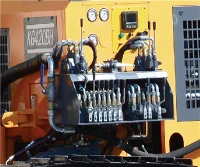
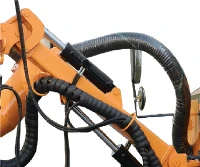
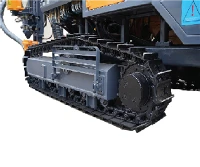


DTH Rotary Drilling Rig
Jining Dongtai Lite Engineering Machinery Co., Ltd. is one of the leading manufacturers and suppliers of dth rotary drilling rig in China. With abundant experience, we warmly welcome you to buy customized dth rotary drilling rig made in China here from our factory. Good service and quality products are available.
Product Overview
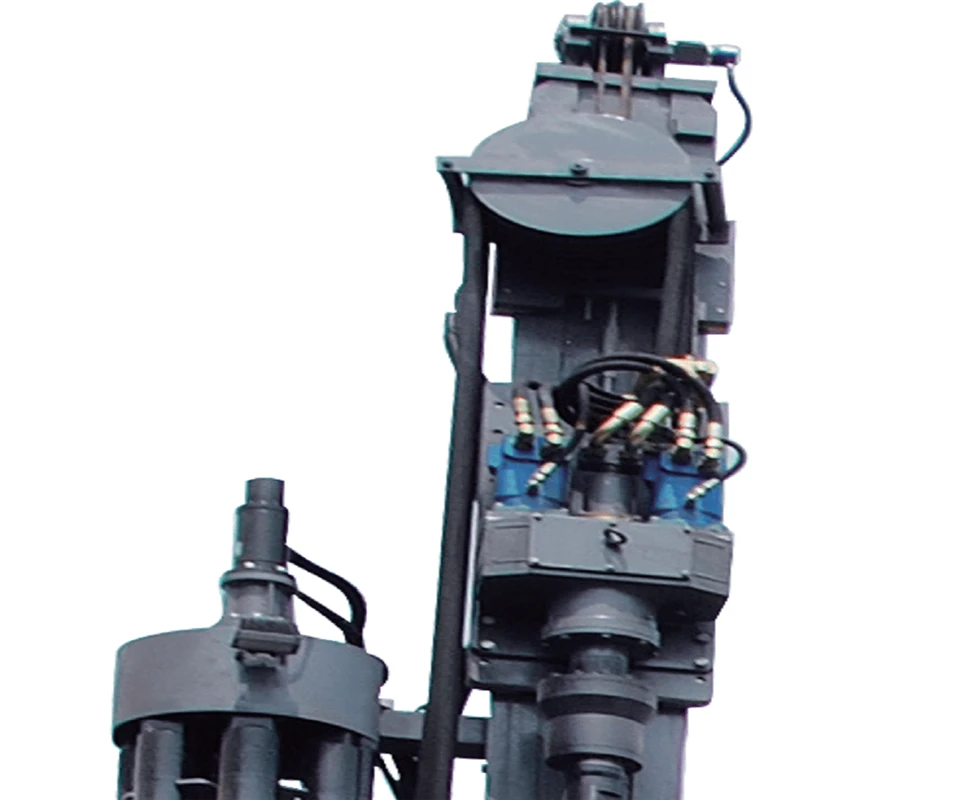
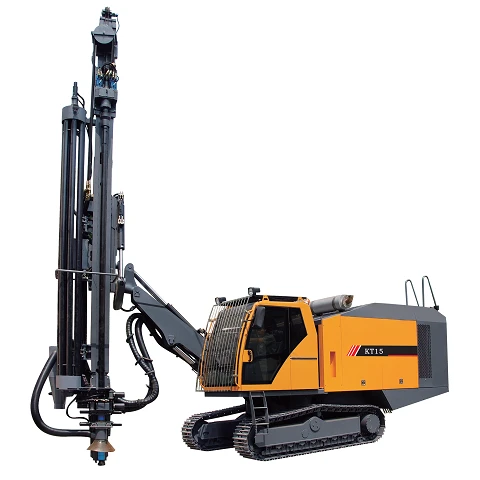
The DTH Rotary Drilling Rig exists in a category of its own. It is not simply the next step beyond the KT 12 - it is a fundamental redefinition of what an integrated DTH drill rig can be. A hexa-engine machine delivering hole diameters up to 445 mm, drilling depths up to 72 m, and a compressor output of 90 to 130 m3/min at working pressures up to 60 bar, the KT 15 is the most powerful, most capable, and most technologically advanced self-contained DTH drill rig ever conceived. It requires no external compressor, no external rod handling crew, no external support equipment, and - in full autonomous mode - no on-site operator. It is, in every measurable dimension, the absolute limit of what integrated DTH drilling technology can achieve.
The KT 15's hexa-engine architecture assigns a dedicated independent power source to six distinct operational systems: drilling hydraulics, ultra-high-pressure compression, crawler drive, automated triple-carousel rod handling, autonomous drilling intelligence, and a sixth engine dedicated exclusively to the machine's next-generation digital twin system - a real-time computational model of the machine and its geological environment that continuously optimizes every drilling parameter for maximum performance, minimum tooling wear, and lowest cost per meter drilled. No other integrated machine in existence carries this level of computational intelligence as a standard feature.
For the world's most productive mining operations, the most demanding drilling contractors, and the most forward-thinking mine operators building the autonomous mines of the future, the DTH Rotary Drilling Rig is not a product choice - it is a statement of intent.
Key Features & Technical Advantages
Hexa-Engine Architecture: Six Independent Load Groups
- Primary engine (240 kW): drilling hydraulics exclusively - rotary head, feed cylinder, mast positioning.
- Secondary engine (380 kW): ultra-high-pressure compressor exclusively, delivering 90 to 130 m3/min at up to 60 bar - the highest air output and pressure of any integrated machine ever built.
- Tertiary engine (200 kW): crawler undercarriage and tramming system exclusively, maintaining full tramming speed under any simultaneous operational load.
- Quaternary engine (132 kW): automated triple-carousel rod handling system exclusively, enabling three independent rod magazines to operate in parallel for the fastest rod addition and extraction cycle times achievable in any drilling machine.
- Quinary engine (93 kW): autonomous drilling control system, advanced sensor array, satellite and 5G communication modules, and all auxiliary electrical systems exclusively.
- Senary engine (75 kW): the KT 15's exclusive digital twin system exclusively - a dedicated computational engine running a real-time physics-based model of the machine, the drill string, and the geological environment, continuously optimizing drilling parameters for maximum penetration rate, minimum tooling wear, and lowest cost per meter drilled.
- Total installed power of 1,120 kW, the highest of any integrated DTH drill rig in existence by a margin of 292 kW over the KT 12.
- Fully simultaneous six-system operation: every system operates at its full rated output simultaneously and independently at all times, with zero power competition between any of the six load groups under any operational condition.
Digital Twin System: The KT 15 Exclusive
- Real-time physics-based digital twin: a computational model of the KT 15's drill string, DTH hammer, drill bit, and surrounding rock formation, updated continuously from the machine's 25-parameter sensor array at 10 Hz sampling rate.
- Continuous parameter optimization: the digital twin calculates the theoretically optimal feed force, rotation speed, and compressor pressure for the current formation at every 0.05 m depth increment, and commands the drilling system to execute those parameters automatically, without operator input.
- Predictive bit wear modeling: the digital twin tracks cumulative bit wear in real time based on formation hardness, penetration rate, and rotation speed, predicting the remaining service life of the current bit and scheduling bit changes before performance degradation occurs.
- Formation boundary prediction: by analyzing the rate of change of drilling parameters, the digital twin predicts formation boundaries 1 to 3 m ahead of the current drill depth, pre-adjusting parameters before the transition occurs rather than reacting after it.
- Fleet-wide learning: digital twin models from every KT 15 in a fleet are synchronized via satellite, allowing the system to incorporate formation knowledge from adjacent holes and nearby machines into its optimization model, improving accuracy continuously throughout the drilling program.
Maximum-Class Drilling System
- Drill hole diameter range: 381 mm to 445 mm, the largest hole diameter range of any integrated DTH machine ever manufactured.
- Maximum drilling depth: up to 72 m per setup, the deepest single-pass capability of any integrated DTH rig.
- Maximum-class rotary head: 16,000 N.m output torque, the highest in the integrated series.
- Ultra-high-capacity hydraulic feed system: 200 kN maximum feed force and 220 kN pull-back for 14-inch to 16-inch DTH hammer operation in rock up to 500 MPa UCS.
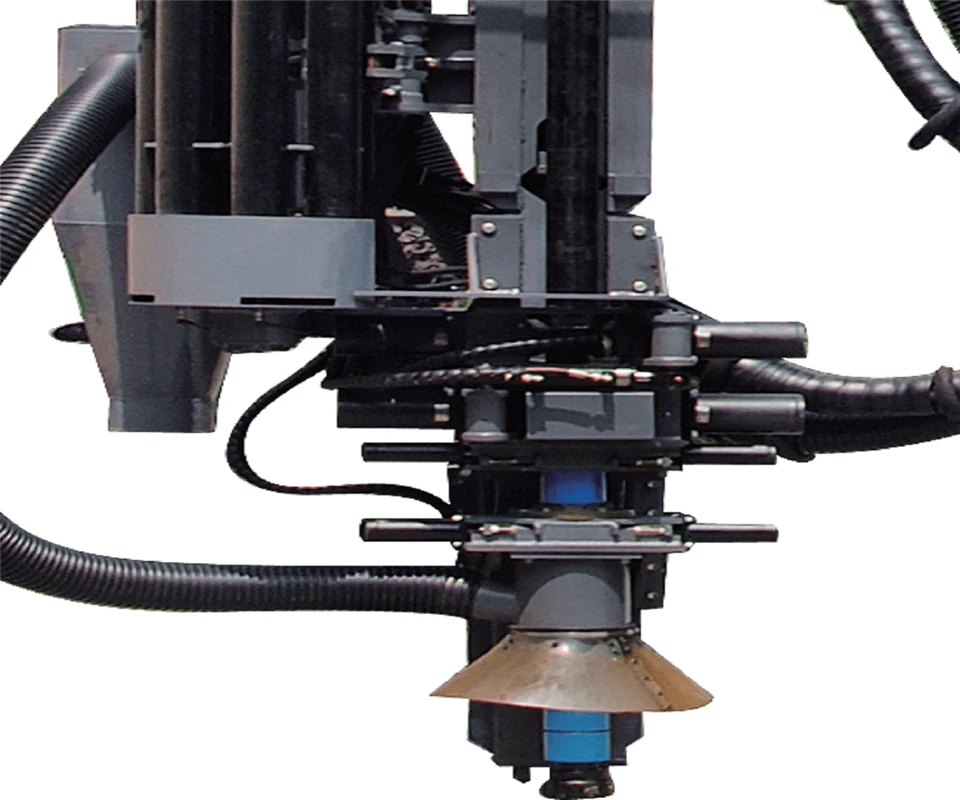
- Automated triple-carousel rod handling system: three independent rod magazines operating in parallel, enabling continuous deep-hole drilling with zero manual rod handling and the fastest rod cycle times of any drilling machine in any category.
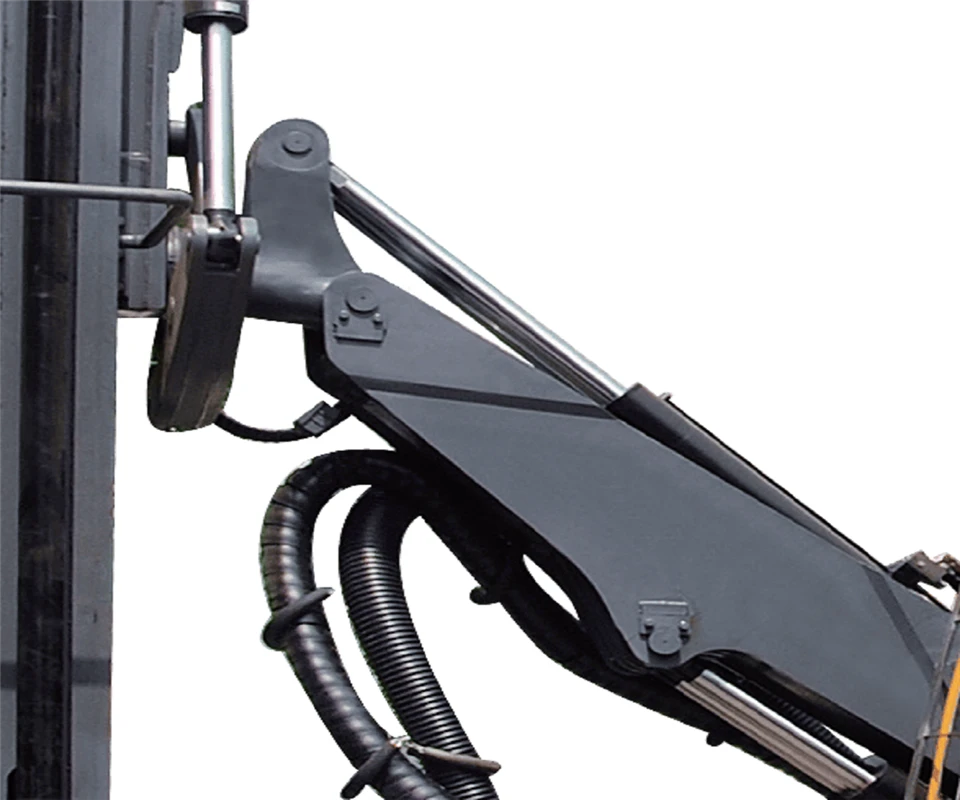
- Extended maximum-class mast with the longest stroke in the integrated series, supporting single-pass drilling to 72 m depth.
Full Autonomous Operation & Next-Generation Operator Environment
- Level 4 autonomous drilling: the KT 15 executes complete drilling programs - including GPS-guided tramming, automatic setup, drilling with digital-twin-optimized parameters, automated rod handling, and autonomous repositioning - without any operator intervention. A single remote operations center can supervise an entire fleet of KT 15 machines simultaneously.
- 5G and satellite dual-link communication: primary 5G connectivity for low-latency real-time control in connected mine environments, with satellite as automatic fallback for remote sites, ensuring continuous fleet management connectivity under all conditions.
- ROPS/FOPS enclosed cabin with quad-zone climate control, HEPA-grade filtration, acoustic insulation below 65 dB(A) - the lowest in-cabin noise level in the integrated series - and a full-immersion curved display spanning the entire forward cabin wall, showing the digital twin visualization, all six engine parameters, compressor status, and the autonomous control dashboard simultaneously.
- Quad-axis anti-deviation system: monitors drill string lateral load in four independent axes simultaneously, providing the most comprehensive hole straightness control of any drilling machine in any category.
- 25-parameter data logging at 0.02 m depth intervals: the highest resolution drilling record of any machine in existence, generating a near-continuous formation profile for every hole.
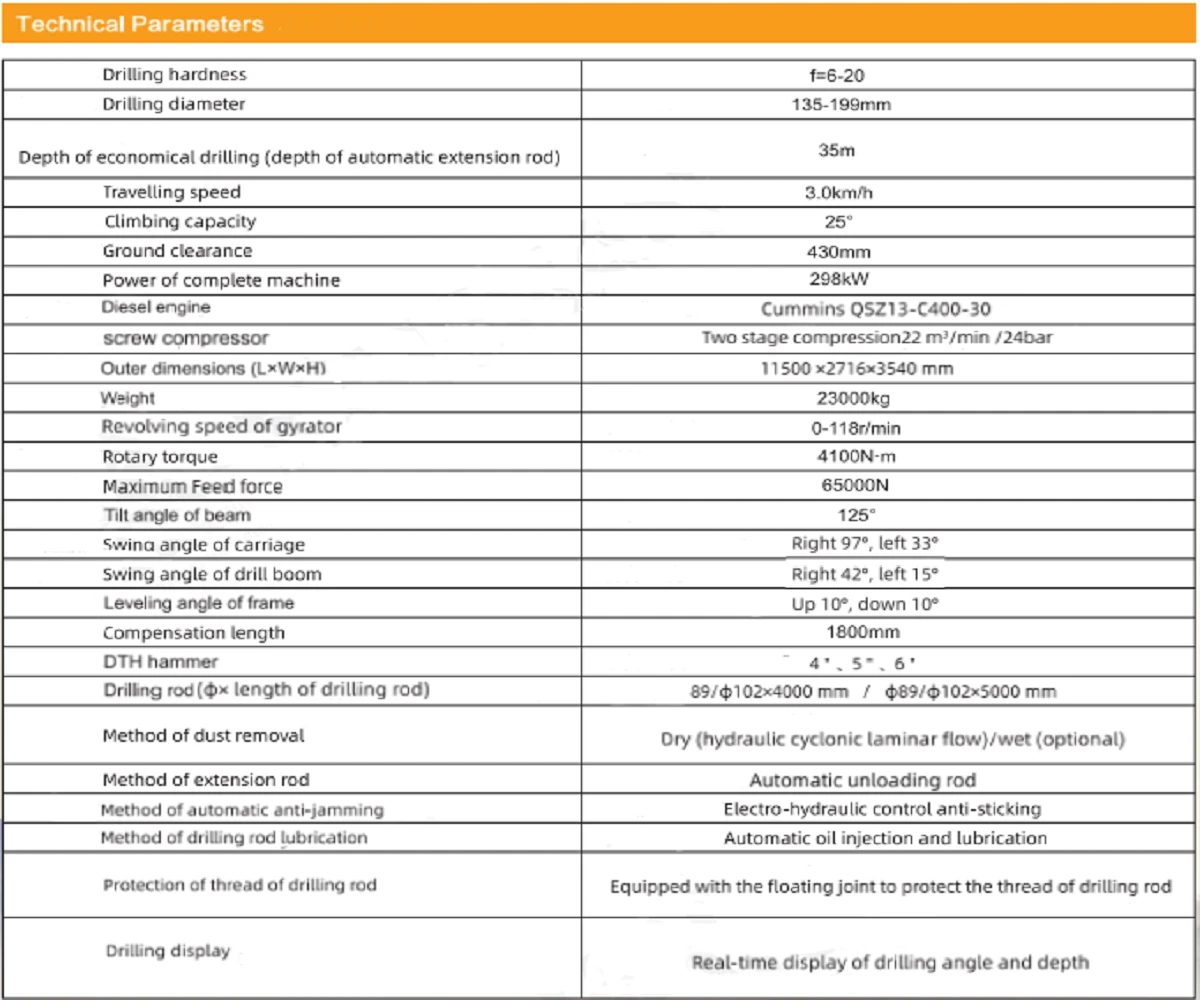
Technical Specifications
Typical Applications
- The world's largest open-pit mining operations: ultra-large-diameter blast-hole drilling at the world's most productive iron ore, copper, gold, and coal mines requiring hole diameters of 381 to 445 mm and depths up to 72 m in a single integrated machine.
- Level 4 fully autonomous mining programs: operations where the KT 15's full autonomous drilling mode enables a remote operations center to manage an entire drilling fleet without on-site operators, representing the leading edge of autonomous mine development.
- Digital twin-optimized drilling programs: projects where the KT 15's real-time digital twin system is used to continuously minimize cost per meter drilled, maximize tooling service life, and generate the highest-resolution formation logs available from any drilling machine.
- Ultra-high-pressure DTH applications: operations using 14-inch to 16-inch ultra-high-pressure DTH hammers (above 55 bar) to maximize penetration rates in the hardest rock formations up to 500 MPa UCS.
- Next-generation smart mine integration: operations integrating the KT 15 into a fully connected autonomous mining ecosystem via 5G and satellite, where the machine's digital twin, fleet-wide learning, and Level 4 autonomous operation interface directly with mine planning, blast design, fleet management, and autonomous haulage systems.
- Flagship demonstration projects: operations where the KT 15 is deployed as the centerpiece of a next-generation autonomous drilling program, demonstrating the full potential of integrated DTH technology to investors, regulators, and industry partners.
Frequently Asked Questions
Q: What is the digital twin system, and why does it require a dedicated engine?
A: The KT 15's digital twin is a real-time physics-based computational model of the machine's drill string, DTH hammer, drill bit, and surrounding rock formation, updated continuously from 25 sensors at 10 Hz sampling rate. It calculates the theoretically optimal drilling parameters for the current formation at every 0.05 m depth increment and commands the drilling system to execute them automatically. The computational load of running this model in real time - processing 25 sensor streams at 10 Hz, solving the physics model, generating parameter commands, updating the predictive bit wear model, and synchronizing with the fleet-wide learning network - requires a dedicated power source to ensure it is never interrupted by competing demands from the drilling, compressor, crawler, or rod handling systems. The senary engine provides that dedicated power, making the digital twin a fully independent system that operates at full capability under all operational conditions.
Q: What is Level 4 autonomous drilling, and how does it differ from the KT 12's Level 3?
A: Level 3 autonomous drilling (KT 12) means the machine can execute a complete drilling cycle without operator intervention, but a human operator must be available to take control when the system encounters a situation it cannot resolve autonomously - such as an unexpected geological anomaly, a stuck drill string, or a safety event. Level 4 autonomous drilling (KT 15) means the machine can handle all foreseeable operational scenarios autonomously, including stuck string recovery, formation anomaly response, and safety event management, without requiring human intervention. A remote operations center monitors the fleet and can intervene at any time, but is not required to be actively engaged for the machine to continue operating safely and productively. This distinction is critical for 24-hour autonomous operations where continuous human monitoring of individual machines is not practical.
Q: How does the triple-carousel rod handling system improve on the KT 12's dual-carousel?
A: The KT 12's dual-carousel system uses two independent rod magazines operating in parallel, eliminating the indexing pause between rod additions. The KT 15's triple-carousel adds a third magazine, enabling a continuous pipeline of rod preparation: while one carousel is presenting a rod for connection, the second is indexing to the next rod position, and the third is being reloaded with rods from the machine's rod storage rack. This three-stage pipeline eliminates all pauses in the rod addition cycle, achieving the theoretical minimum rod change time limited only by the mechanical connection speed. On a 72 m borehole requiring 15 to 18 rod additions, the triple-carousel's continuous pipeline operation delivers a measurable improvement in holes-per-shift productivity over the dual-carousel design.
Q: What does the 5G primary communication link provide that satellite cannot?
A: Satellite communication provides reliable connectivity in remote locations but has inherent latency (typically 600 to 700 ms for geostationary satellite links) that limits the responsiveness of real-time control commands. 5G communication provides latency below 10 ms, enabling true real-time remote control of the KT 15's autonomous systems, real-time digital twin synchronization across the fleet, and high-bandwidth video streaming from the machine's camera array to the remote operations center. In connected mine environments with 5G infrastructure, the KT 15 operates as a fully integrated node in the mine's digital ecosystem, exchanging data with mine planning software, autonomous haulage systems, and blast design platforms in real time. Satellite provides automatic fallback for remote sites or 5G outages, ensuring continuous connectivity under all conditions.
Q: How does the KT 15 compare to the KT 12, and what justifies the step up?
A: The KT 12 is the penta-engine flagship, drilling 311 to 381 mm holes to 65 m depth with 828 kW of total power and up to 55 bar compressor pressure. The KT 15 steps beyond that in every dimension: hole diameters from 381 to 445 mm, depths to 72 m, 1,120 kW of hexa-engine power, compressor pressure up to 60 bar, and free air delivery of 90 to 130 m3/min for 14-inch to 16-inch DTH hammer operation. The KT 15 also adds the digital twin system (dedicated senary engine), Level 4 autonomous drilling (vs. Level 3), triple-carousel rod handling (vs. dual), 5G primary communication, quad-axis anti-deviation (vs. tri-axis), 25-parameter data logging at 0.02 m resolution (vs. 20 parameters at 0.05 m), and below-65 dB(A) cabin noise (vs. below 70 dB(A)). The step up is justified when your project requires hole diameters above 381 mm, depths beyond 65 m, Level 4 autonomous operation, or the digital twin system's continuous parameter optimization capability.
Q: Is the KT 15 a standard production machine or a bespoke engineering program?
A: The KT 15 is a bespoke engineering program. Each unit is configured to the specific geological, operational, regulatory, and connectivity requirements of the customer's project, including the compressor specification, engine configuration, digital twin formation model initialization, autonomous control system programming, 5G and satellite communication integration, and cabin configuration. The procurement process begins with a dedicated project engineering consultation between the customer's technical team and our senior project engineers, during which the project requirements are defined and the machine configuration is specified. Lead time from confirmed order to site delivery is project-specific and is agreed during the consultation process. Contact our senior project team to initiate the process.
Q: What are the site infrastructure requirements for deploying the KT 15?
A: The KT 15 requires a heavy-haul road capable of supporting a 100-tonne transport load for delivery to site. On-site, the machine self-trams at up to 1.2 km/h using GPS-guided autonomous navigation. For full Level 4 autonomous operation, the site requires either 5G network coverage (for connected mine environments) or satellite communication infrastructure (standard for remote sites). The remote operations center requires a high-bandwidth internet connection for real-time fleet dashboard access and digital twin synchronization. Our project engineering team will assess site infrastructure requirements as part of the project consultation process and advise on any infrastructure upgrades required to support full KT 15 capability.
Q: What after-sales support and service infrastructure do you provide for KT 15 deployments?
A: KT 15 deployments receive our platinum-tier project support package: a dedicated senior project engineering team assigned from contract signature through project completion and beyond, on-site commissioning and comprehensive operator, maintenance, and remote operations center training, a permanent resident service engineer for the duration of the drilling program, a dedicated on-site spare parts depot with a full-time logistics manager, and a direct 24-hour hotline to our factory engineering and digital twin development teams. The digital twin system provides our service team with the most detailed real-time machine health data available from any drilling machine, enabling predictive maintenance interventions weeks before faults develop. For multi-fleet deployments, a dedicated global support coordination center is established for the project.
Inquiry & After-Sales Support
The KT 15 procurement process begins with a dedicated project engineering consultation. To initiate the process, please contact our senior project engineering team and provide the following information:
- Target hole diameter and maximum required depth
- Rock type, estimated UCS (MPa), and full geological profile
- Required daily production output and autonomous operation level
- Site location, elevation, climate conditions, and 5G / satellite connectivity status
- Applicable operator protection, dust exposure, noise level, and autonomous operation regulatory requirements
- Number of units required, project duration, and integration requirements with existing mine systems
Hot Tags: dth rotary drilling rig, China dth rotary drilling rig manufacturers
Previous
Heavy-Duty Surface Drilling RigYou Might Also Like



Send Inquiry