

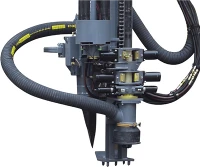
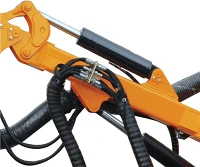
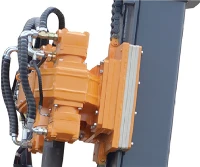
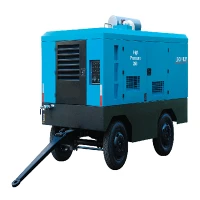

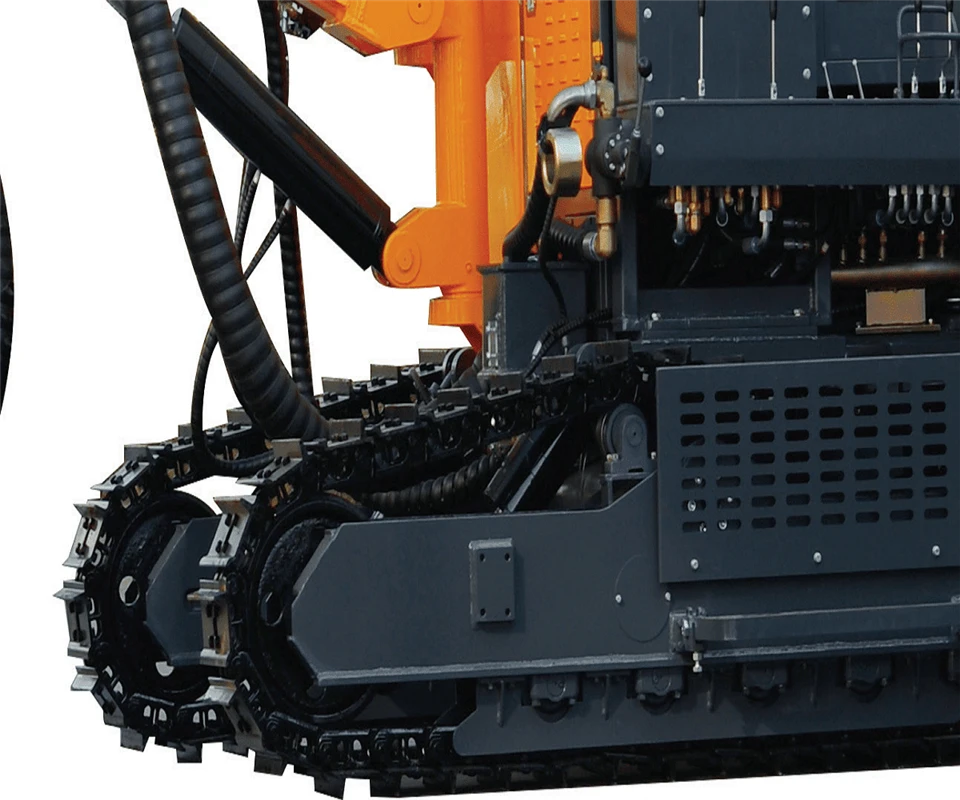
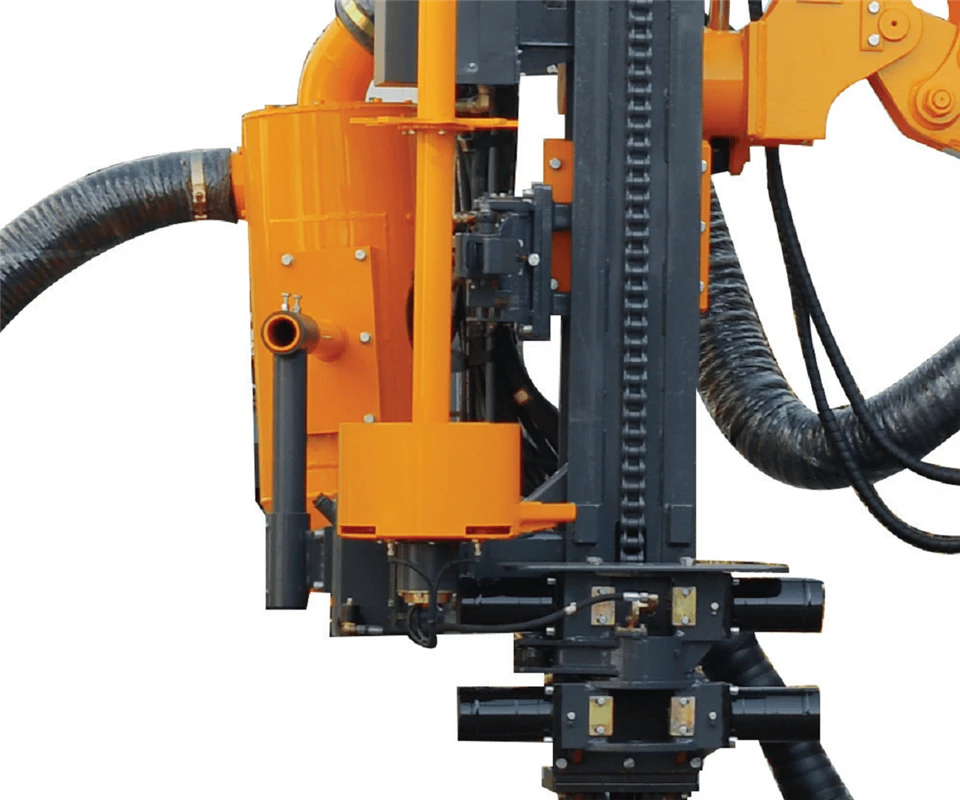
Crawler-Mounted DTH Drill Rig
Jining Dongtai Lite Engineering Machinery Co., Ltd. is one of the leading manufacturers and suppliers of crawler-mounted dth drill rig in China. With abundant experience, we warmly welcome you to buy customized crawler-mounted dth drill rig made in China here from our factory. Good service and quality products are available.
Product Overview
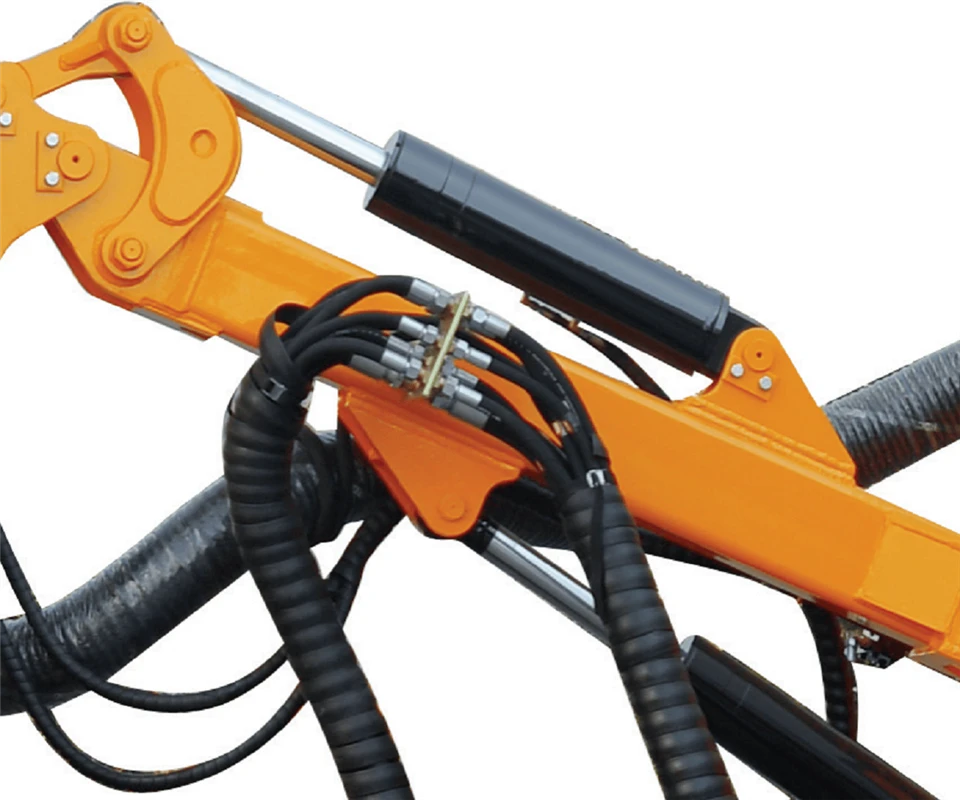
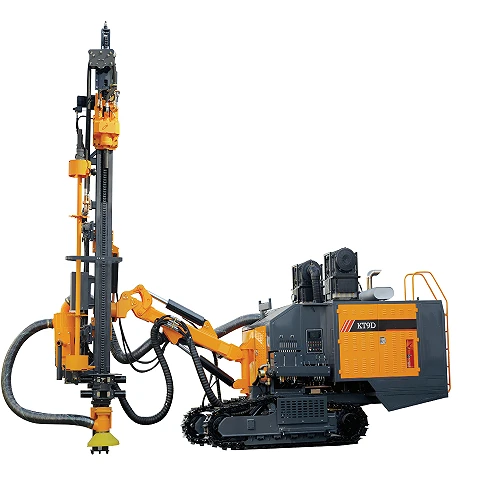
The Crawler-Mounted DTH Drill Rig combines the full tri-engine power architecture and ultra-class drilling capability of the KT9C with a fully enclosed ROPS/FOPS certified operator cabin, delivering the highest level of operator protection, climate control, and in-cab instrumentation available in the KT9 series. Where the KT9C provides the same drilling performance in an open-station configuration for cost-sensitive applications, the KT9D is the choice for operations where site regulations, corporate HSE standards, or extreme climate conditions mandate an enclosed operator environment at the ultra-class performance level.
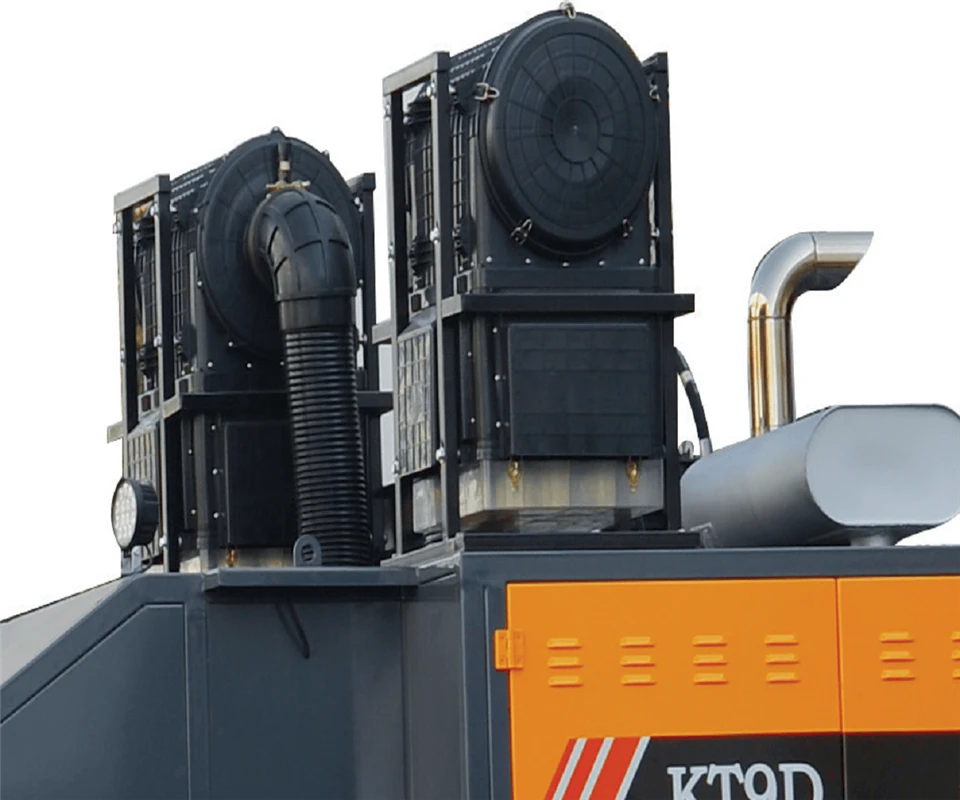
Like the KT9C, the KT9D is built around a tri-engine architecture that assigns a dedicated independent power source to each of the machine's three major load groups: drilling hydraulics, high-pressure compressor, and crawler drive. This ensures that the compressor delivers its full rated 45 to 65 m3/min air output at up to 45 bar at all times, regardless of simultaneous drilling or tramming demand, enabling 8-inch to 10-inch DTH hammer operation at full performance with no external compressor infrastructure. Combined with hole diameters up to 254 mm, a maximum drilling depth of 55 m, and 7,000 N.m of rotary torque, the KT9D brings large standalone rig performance into a single self-contained machine - with the added assurance of a world-class enclosed operator environment.
For tier-one mining companies and major drilling contractors who demand the absolute maximum in integrated DTH capacity, operator welfare, and operational intelligence simultaneously, the Crawler-Mounted DTH Drill Rig is the definitive solution: no compromise on performance, no compromise on safety, and no external compressor required.
Key Features & Technical Advantages
Tri-Engine Architecture: Three Independent Load Groups
- Primary engine (160 kW) drives all drilling hydraulics exclusively: rotary head, feed cylinder, mast positioning, and rod handling. No power shared with the compressor or crawler at any point in the operating cycle.
- Secondary engine (220 kW) drives the high-pressure compressor exclusively, delivering 45 to 65 m3/min at up to 45 bar regardless of simultaneous drilling or tramming demand.
- Tertiary engine (93 kW) drives the crawler undercarriage and auxiliary systems exclusively, maintaining full tramming speed during drilling and compressor operation without drawing power from either of the other two systems.
- Total installed power of 473 kW with independent engine management, cross-system health monitoring, and individual engine start/stop capability for fuel optimization during partial-load operating phases.
- Simultaneous full-output operation: the KT9D can tram at full speed, drill at full feed force and rotation, and maintain full compressor output all at the same time, eliminating the productivity loss caused by power competition in dual-engine designs during repositioning moves.
Premium Enclosed Operator Cabin
- ROPS/FOPS certified enclosed cabin with full structural certification to international mining and construction equipment safety standards, providing roll-over and falling-object protection across all operating conditions at the KT9D's operating weight.
- Dual-zone air conditioning and heating system maintaining optimal operator comfort across the full range of ambient conditions, from desert heat exceeding 50 degrees C to cold-climate winter operations below -20 degrees C.
- Enhanced acoustic insulation package reducing in-cabin noise levels to below 75 dB(A), eliminating mandatory hearing protection requirements inside the cab and enabling clear voice communication between the operator and ground crew.
- Positive-pressure HEPA-grade filtered air supply providing the highest level of in-cabin dust protection, meeting the most stringent occupational exposure limits for respirable crystalline silica (RCS) in all major regulatory frameworks without reliance on respiratory PPE inside the cab.
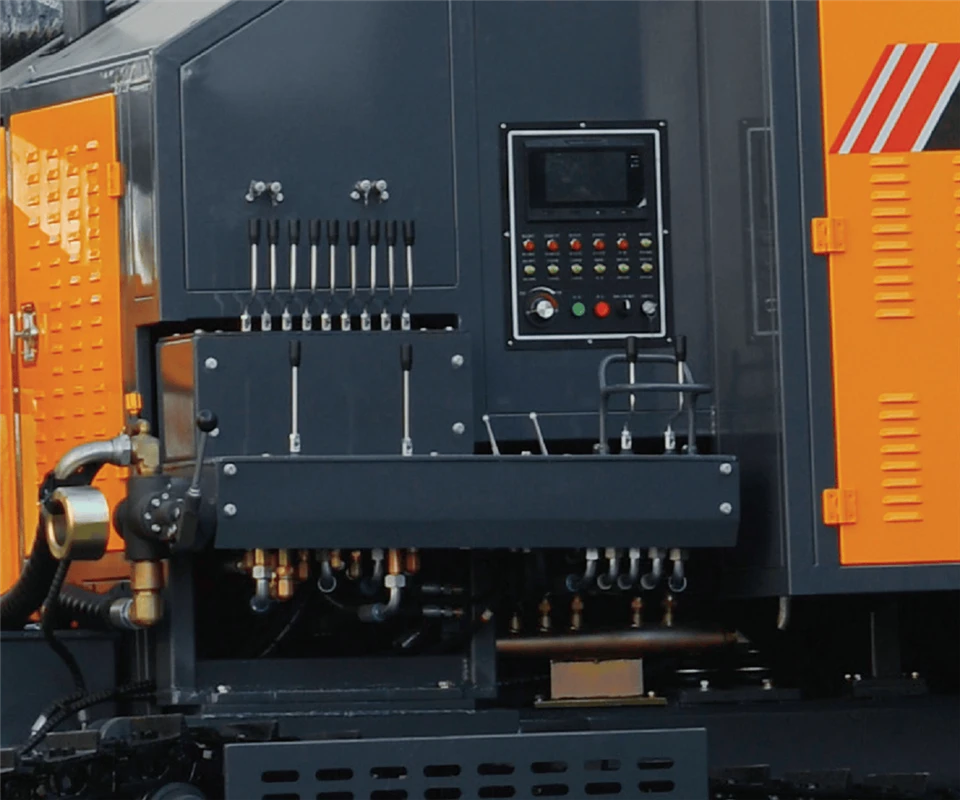
- Wide-format touchscreen HMI displaying all drilling, compressor, and three-engine parameters on a single high-resolution configurable dashboard, with the full programmable drilling control interface accessible from the ergonomic suspension operator seat.
Ultra-Class Drilling System
- Drill hole diameter range: 203 mm to 254 mm, covering the largest blast-hole specifications used in major open-pit mining and high-production quarrying.
- Maximum drilling depth: up to 55 m per setup, the deepest single-pass capability in the integrated series.
- Maximum-class rotary head: 7,000 N.m output torque for large-diameter drill string management in the hardest rock formations at maximum depth.
- Ultra-high-capacity hydraulic feed system: 90 kN maximum feed force and 100 kN pull-back for 9-inch to 10-inch DTH hammer operation in rock up to 420 MPa UCS.
- Extended heavy-duty mast with maximum stroke length for single-pass drilling to 55 m, minimizing rod-addition cycles on deep-bench programs.
- Mast angle adjustment supports vertical and inclined drilling up to 30 degrees from vertical for pre-split blasting, contour drilling, and angled production holes.
Advanced Intelligent Control Suite
- Extended multi-layer programmable drilling control: up to 10 geological layer profiles per hole, each with independent feed force, rotation speed, penetration rate, and compressor pressure targets, enabling fully automated parameter management across complex multi-formation profiles.
- Dual-axis anti-deviation system: monitors drill string lateral load in two perpendicular planes simultaneously for earlier deviation detection and tighter hole straightness tolerances across the full 55 m depth range.
- Adaptive anti-jamming system: continuously refines its torque detection threshold based on the actual signature of the current formation, reducing false-positive interventions and improving response speed in genuinely jamming conditions.
- 12-parameter data logging at 0.1 m depth intervals: generates a complete formation log alongside the production record for every hole, automatically synchronized to the cloud dashboard via the remote monitoring module.
- Satellite-primary remote monitoring with predictive maintenance alerts: continuous data transmission via satellite regardless of site location, with automated maintenance work orders generated when engine and compressor parameters approach service thresholds.
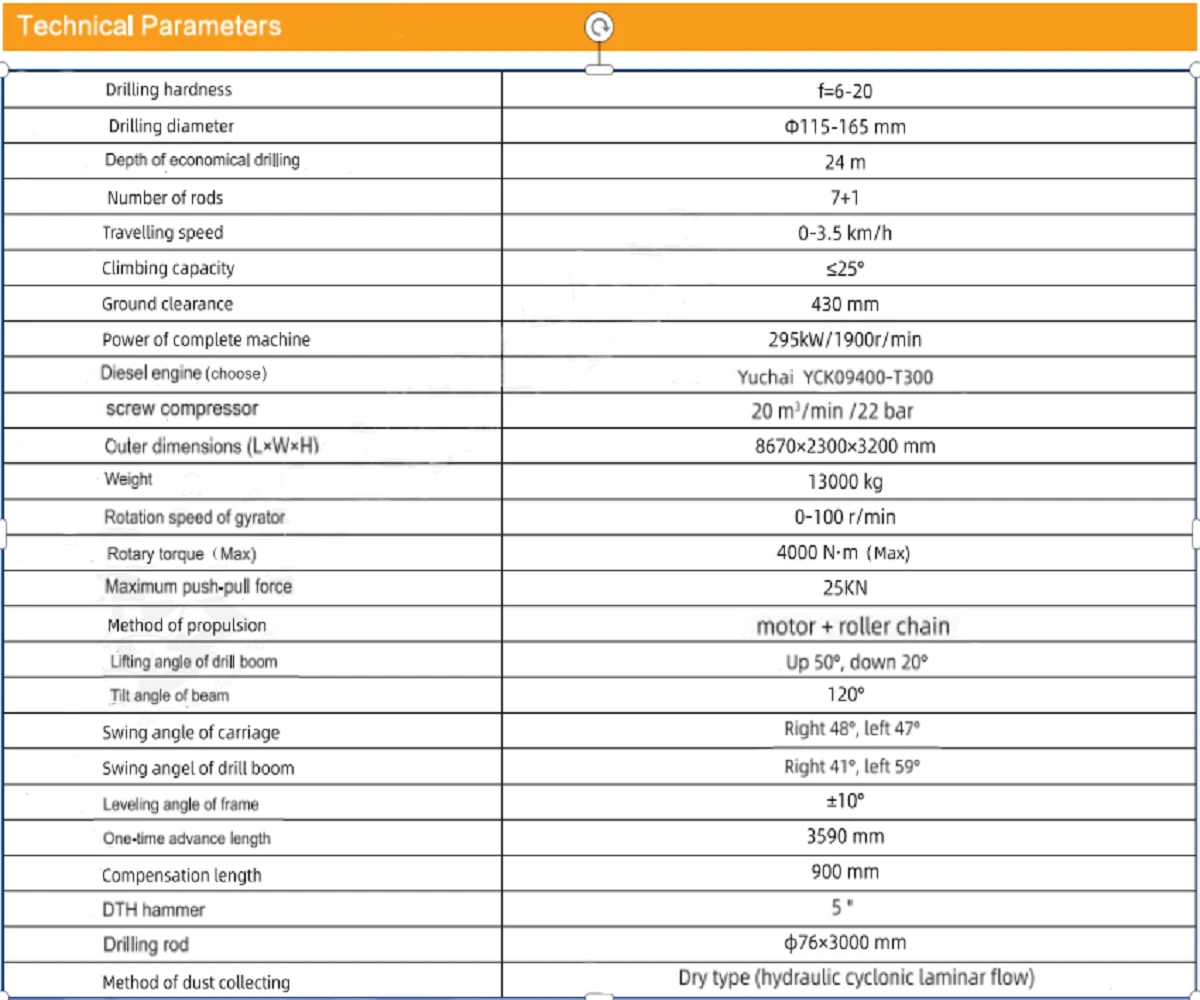
Technical Specifications
Typical Applications
- Tier-one large-scale open-pit mining with mandatory enclosed cabin requirements: high-bench blast-hole drilling at major operations where national mining safety codes or corporate HSE policies mandate ROPS/FOPS enclosed operator protection on all mobile drilling plant at this machine class.
- Ultra-large-scale quarrying in extreme climates: large-diameter production drilling in granite, basalt, limestone, and sandstone quarries in desert, tropical, or cold-climate environments where open-station operation would expose operators to unacceptable thermal stress across long shifts.
- High-dust silica-rich formations: drilling in granite, sandstone, and quartzite formations where respirable crystalline silica (RCS) dust exposure is a primary occupational health concern and HEPA-grade cabin filtration is a compliance requirement rather than an option.
- Complex multi-geology deep-hole programs: sites where the geological profile varies significantly within individual holes or across the drilling zone, requiring the 10-layer programmable control to maintain optimal performance and tooling protection across all formation transitions at depths up to 55 m.
- Remote mega-project fleet deployments requiring full welfare compliance: large multi-rig drilling campaigns in remote locations where both satellite-primary fleet management and enclosed operator protection are simultaneously required by project specifications.
- Pre-split and precision wall control at maximum scale: large-diameter angle drilling for final pit wall control in major open-pit mines, combining the KT9D's ultra-class hole diameter and depth capability with the dual-axis anti-deviation system's tighter hole straightness tolerances.
Frequently Asked Questions
Q: What is the difference between the KT9D and the KT9C, and how do I choose between them?
A: The KT9C and KT9D are mechanically identical in every respect that affects drilling performance: same tri-engine architecture, same compressor specification (45 to 65 m3/min, up to 45 bar), same hole diameter range (203 to 254 mm), same maximum depth (55 m), same rotary torque (7,000 N.m), and the same full intelligent control suite including 10-layer programmable control, dual-axis anti-deviation, adaptive anti-jamming, 12-parameter data logging, and satellite-primary remote monitoring with predictive maintenance. The sole difference is the operator station: the KT9C features an open platform with a ROPS-rated canopy, while the KT9D is equipped with a fully enclosed ROPS/FOPS certified cabin with dual-zone air conditioning, heating, HEPA-grade dust filtration, and a touchscreen HMI. Choose the KT9D when site regulations mandate enclosed operator protection, when climate conditions require a controlled cabin environment, or when RCS dust exposure compliance requires cabin-level filtration. Choose the KT9C when those requirements do not apply and capital cost efficiency is the priority.
Q: How does the KT9D compare to the KT 7H, and when is the step up to the KT9 series justified?
A: The KT 7H is the enclosed-cabin flagship of the KT 7 series, drilling 165 to 229 mm holes to 48 m depth with 310 kW of dual-engine power and up to 40 bar compressor pressure. The KT9D steps beyond that in every dimension: hole diameters from 203 to 254 mm, depths to 55 m, 473 kW of tri-engine power, compressor pressure up to 45 bar, and free air delivery of 45 to 65 m3/min for 8-inch to 10-inch DTH hammer operation. The KT9D also adds the dedicated crawler engine for simultaneous full-output tramming and drilling. The step up to the KT9D is justified when your project requires hole diameters above 229 mm, depths beyond 48 m, ultra-high-pressure hammer operation above 40 bar, or when the simultaneous full-output tri-engine capability is needed for sustained high-production operation at maximum capacity.
Q: What DTH hammer sizes are compatible with the KT9D?
A: The KT9D's compressor delivers 45 to 65 m3/min of free air delivery at working pressures up to 45 bar, which is sufficient to drive 7-inch to 10-inch DTH hammers at full rated performance. Compatible hole diameters range from 203 mm to 254 mm depending on the hammer and bit combination selected. For ultra-high-pressure hammer applications above 40 bar, the KT9D is the most fully equipped enclosed-cabin model in the integrated series with the compressor capacity to sustain full hammer performance at this scale. Our technical team can recommend the optimal hammer and bit specification for your target hole diameter and rock hardness.
Q: How does the HEPA-grade cabin filtration on the KT9D differ from standard positive-pressure filtration?
A: Standard positive-pressure filtration captures particles above approximately 1 micron, which is effective for general dust suppression. The HEPA-grade final filter stage on the KT9D captures particles down to 0.3 microns at 99.97% efficiency, covering the respirable crystalline silica (RCS) particle size range that poses the greatest occupational health risk in silica-rich rock drilling. This provides a higher level of in-cabin RCS protection than standard filtration, meeting the most stringent occupational exposure limits in all major regulatory frameworks without reliance on respiratory PPE inside the cab. For operations in granite, sandstone, or quartzite formations where RCS compliance is a primary concern, the HEPA-grade system provides a meaningful and auditable improvement over standard cabin filtration.
Q: Can the KT9D maintain full compressor output while tramming between hole positions?
A: Yes. This is one of the defining advantages of the tri-engine architecture. Because the crawler drive has its own dedicated tertiary engine, tramming between hole positions draws no power from the primary drilling engine or the secondary compressor engine. The compressor continues to run at its full rated output during tramming, meaning the DTH hammer is ready to drill at full performance the moment the machine arrives at the next hole position, with no warm-up or pressure build-up delay. On high-cycle drilling programs with closely spaced hole patterns, this capability directly reduces the non-productive time per hole and increases the number of holes completed per shift.
Q: What are the transportation and mobilization requirements for the KT9D?
A: With an operating weight of approximately 43,500 kg, the KT9D requires a heavy-duty low-bed trailer rated for 46 tonnes or above; special transport permits will be required in most markets due to the machine's weight and width. As a single integrated machine, mobilization requires only one trailer and one loading operation, a significant advantage over a conventional rig-plus-compressor combination at this scale. On-site, the rig self-trams between drilling positions at up to 2.0 km/h with full compressor output maintained during tramming. For international export, the machine is shipped as break-bulk cargo or on a heavy flat-rack, with full export documentation including CE declaration of conformity, ROPS/FOPS certification, and operation manuals in English provided with every unit.
Q: How is the three-engine maintenance schedule managed in practice?
A: All three engines are identical units from the same manufacturer family, sharing the same service intervals, oil specifications, filter part numbers, and maintenance procedures. The centralized service layout provides ground-level access to all three engines' daily maintenance points, the compressor service points, and the hydraulic system in a single service walk-around. The satellite-primary remote monitoring module tracks engine hours for all three units independently and generates maintenance alerts when service intervals are approaching, enabling the site maintenance team to plan service windows proactively. A unified maintenance schedule covering all systems is provided in the operation manual, and our spare-parts supply covers all three engines as part of the standard parts catalogue.
Q: What after-sales support and service infrastructure do you provide for KT9D fleet deployments?
A: For KT9D fleet deployments, we provide a comprehensive project support package: on-site commissioning and operator training for all units, a resident service engineer for the duration of the drilling campaign, a pre-positioned spare parts kit sized for the project duration and fleet size, and a direct technical hotline to our factory engineering team. The satellite-primary remote monitoring module allows our service team to monitor all three engines and the compressor in real time and diagnose developing faults remotely before dispatching a field engineer. Standard consumables and wear parts are dispatched within 24 to 72 hours; major components within 7 to 20 business days depending on destination.
Inquiry & After-Sales Support
For technical consultations, project-specific quotations, fleet planning, or spare parts inquiries, please contact our international sales engineering team. To receive the most accurate and timely proposal, please provide the following information:
- Target hole diameter and maximum required depth
- Rock type, estimated UCS (MPa), and geological profile complexity
- Required daily production output (meters per shift or holes per day)
- Site location, elevation, climate conditions, and cellular coverage availability
- Applicable operator protection, dust exposure, and noise level regulatory requirements
- Number of rigs required, project duration, and preferred service package level
- Preference for open-station (KT9C) or enclosed-cabin (KT9D) configuration
Hot Tags: crawler-mounted dth drill rig, China crawler-mounted dth drill rig manufacturers
You Might Also Like



Send Inquiry