

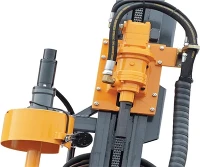
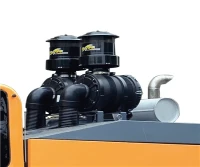
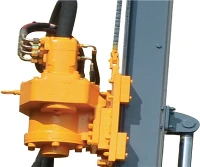
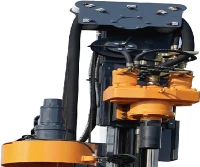

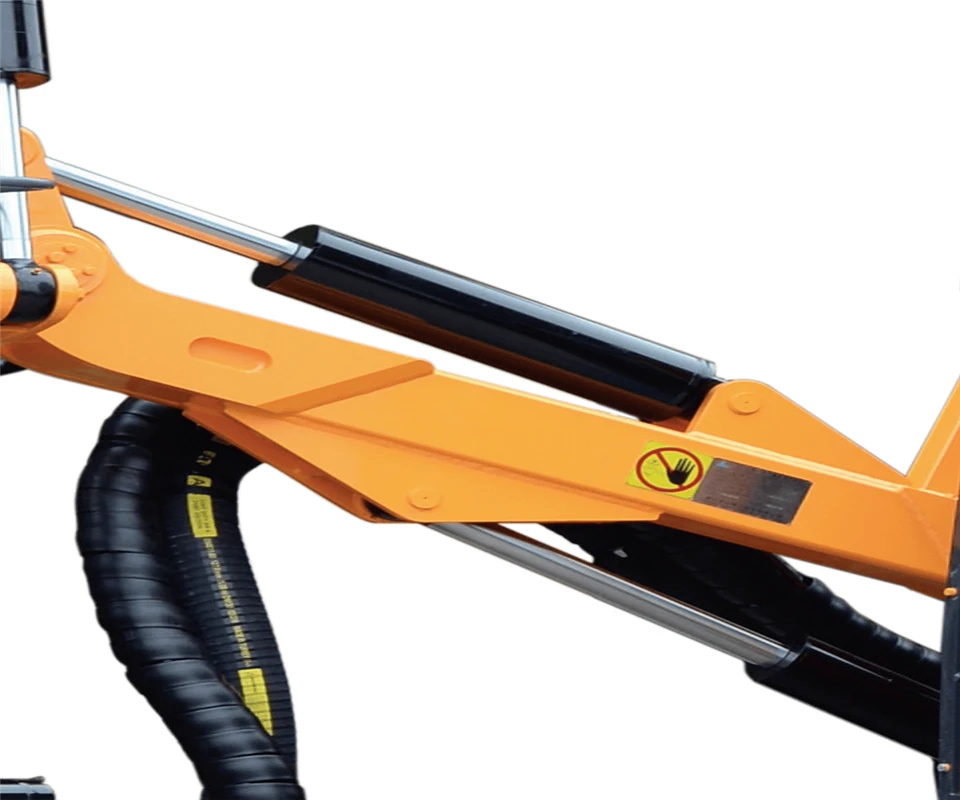
Surface Rock Drill Rig
Jining Dongtai Lite Engineering Machinery Co., Ltd. is one of the leading manufacturers and suppliers of surface rock drill rig in China. With abundant experience, we warmly welcome you to buy customized surface rock drill rig made in China here from our factory. Good service and quality products are available.
Product Overview
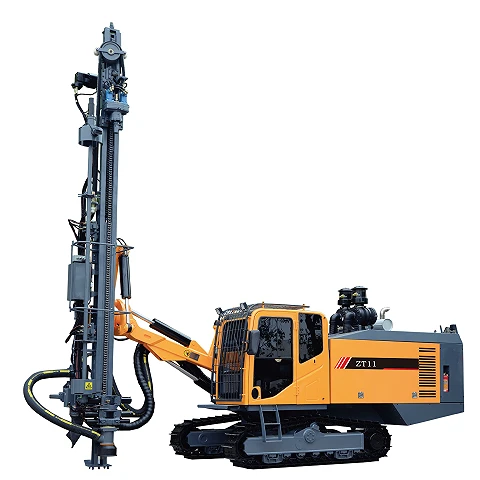
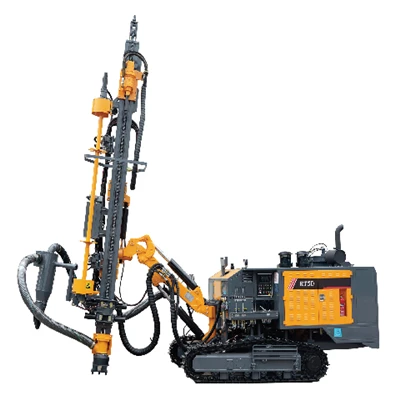
The Surface Rock Drill Rig is the flagship model of the ZT series, combining the maximum drilling depth, the highest compressor output, and the most advanced operator environment available in the ZT lineup into a single, fully self-contained crawler-mounted machine. Building on the ZT 10's high-capacity integrated platform, the ZT 11 adds a fully enclosed ROPS/FOPS certified operator cabin with climate control and dust filtration, a dual-engine architecture that dedicates independent power sources to the drilling system and the compressor respectively, and an extended maximum drilling depth of 600 m - making it the most capable and most fully equipped integrated deep borehole drilling machine in our range.
Designed for the most demanding water well, geothermal, and deep geotechnical applications where depth, diameter, operator welfare, and operational independence must all be maximized simultaneously, the Surface Rock Drill Rig serves contractors and project developers who accept no compromise between drilling performance, safety standards, and logistical efficiency. Whether the challenge is constructing 500 m deep municipal water supply wells in hard granite, drilling 400 m geothermal boreholes for district heating networks, or executing a large-scale deep ground investigation program in a remote location, the ZT 11 delivers the capacity, reliability, and self-contained independence to complete the work without external support equipment.
For water well and geothermal drilling contractors who have consistently found that integrated rigs lack the depth capability, compressor output, or operator welfare standards their projects demand, the ZT 11 closes every one of those gaps in a single machine.
Key Features & Technical Advantages
Dual-Engine Architecture: Independent Power for Drilling and Compression
- Dedicated primary engine (160 kW) drives all drilling hydraulics exclusively: rotary head, feed cylinder, mast positioning, and rod handling. No power shared with the compressor at any point in the operating cycle.
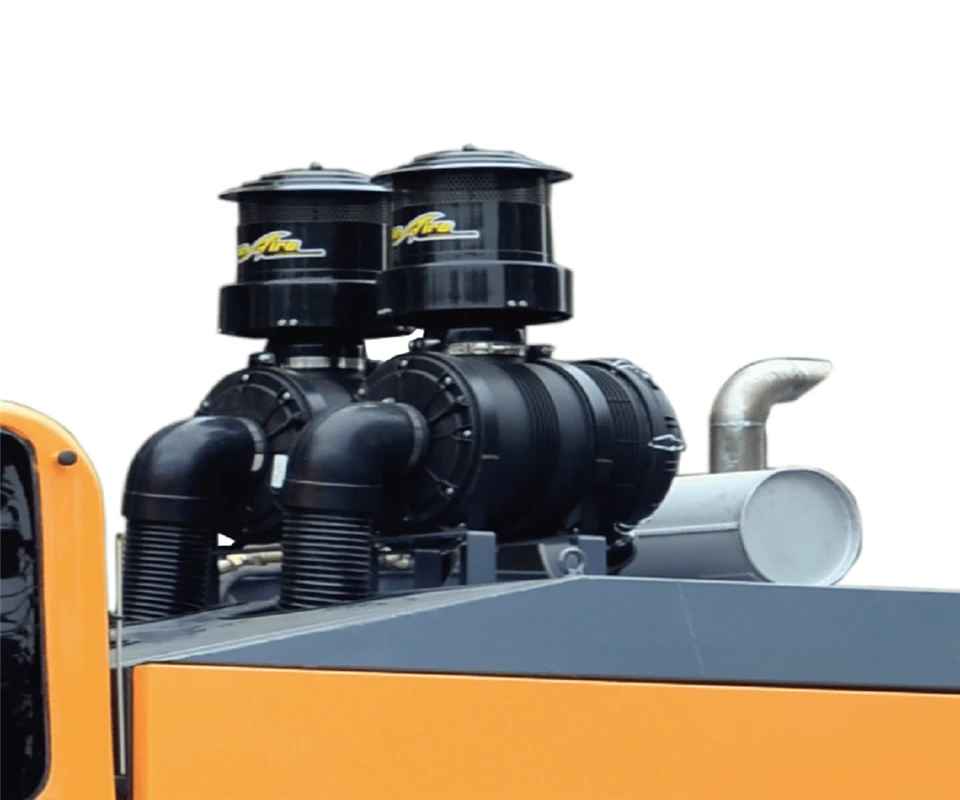
- Dedicated secondary engine (160 kW) drives the high-pressure compressor exclusively, delivering 20 to 35 m3/min of free air delivery at working pressures up to 40 bar regardless of simultaneous hydraulic demand from the drilling system.
- Full compressor output at all times: because the compressor has its own dedicated engine, it delivers its full rated air pressure and volume during rod additions, mast repositioning, and other hydraulic operations that would reduce compressor output on a single-engine design. At depths approaching 600 m, where maintaining adequate hammer face pressure is critical, this independence is a significant performance advantage.
- Total installed power of 320 kW, providing the combined output required to sustain large-diameter DTH drilling at full production rates across extended deep-borehole programs in the hardest geological conditions.
- Independent engine management: each engine can be started, stopped, and serviced independently, allowing the drilling system to remain operational during compressor maintenance intervals and vice versa, minimizing unplanned downtime on multi-well programs.
Enclosed ROPS/FOPS Operator Cabin
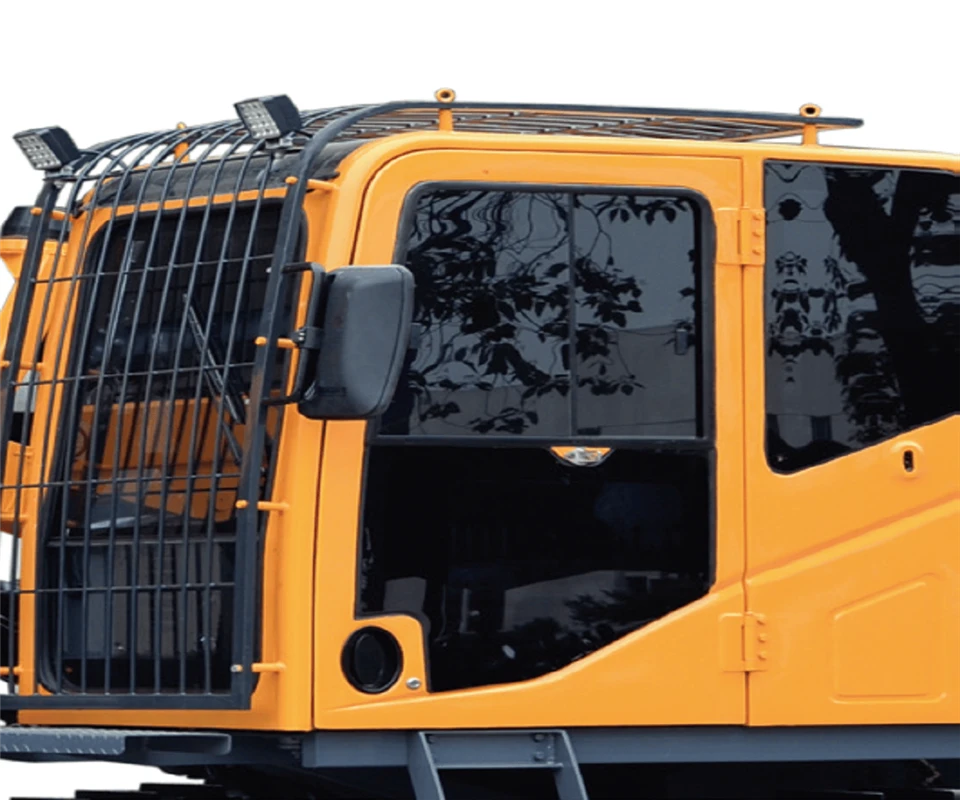
- ROPS/FOPS certified enclosed cabin with full structural certification to international mining and construction equipment safety standards, providing roll-over and falling-object protection across all operating conditions.
- Air conditioning and heating system maintaining operator comfort across the full range of ambient conditions, from desert heat to cold-climate winter operations, reducing operator fatigue and sustaining concentration across long deep-borehole drilling shifts.
- Acoustic insulation reducing in-cabin noise levels to below occupational exposure limits, eliminating mandatory hearing protection requirements inside the cab and enabling clear communication between the operator and ground crew during rod handling operations.
- Positive-pressure filtered air supply preventing dust ingress and protecting the operator from respirable dust exposure, including respirable crystalline silica (RCS) in silica-rich rock formations such as granite and sandstone.
- Integrated instrument panel displaying real-time parameters for both engines, the compressor, and the drilling system: borehole depth, rotation speed, feed pressure, compressor working pressure, compressor delivery, and both engine load and temperature readings, all from a single operator workstation inside the cab.
Ultra-Deep Borehole Drilling System
- Maximum drilling depth: up to 600 m with rod additions, the deepest capability in the ZT series, suitable for deep confined aquifer water wells, ultra-deep geothermal installations, and deep ground investigation programs in consolidated rock formations.
- Borehole diameter range: 150 mm to 450 mm, covering the full range of water well, geothermal, and deep geotechnical borehole specifications from monitoring wells to large-diameter municipal production wells.
- Ultra-high pull-back force of 80 kN, providing the extraction capacity required to retrieve the drill string from 600 m depth in tight or partially collapsed formations without risk of string loss.
- High-torque rotary head with maximum output torque of 6,500 N.m, compatible with large-diameter drill strings and capable of maintaining consistent rotation under variable rock hardness conditions at maximum depth.
- Extended heavy-duty mast with long stroke for efficient rod addition and extraction cycles, minimizing non-drilling time during deep borehole construction.
- Casing advancement system (standard): simultaneous drilling and casing installation for unstable formations, water-bearing sands, and collapsing overburden, ensuring borehole integrity throughout the full depth range.
- Mast angle adjustment supports vertical and inclined drilling up to 20 degrees from vertical for angled investigation boreholes and directional water well programs.
Advanced Monitoring & Operational Intelligence
- Comprehensive borehole data logging system (standard): records borehole depth, penetration rate, rotation speed, feed force, and compressor pressure at defined depth intervals for every borehole, generating a complete drilling log for quality assurance, geological interpretation, and project reporting.
- Remote monitoring module (optional): transmits machine health data, borehole count, daily meterage, fuel consumption, and fault codes to the project management team in real time via cellular or satellite link, enabling proactive maintenance scheduling on large multi-well programs.
- Integrated mud pump system (optional) for rotary mud drilling in unstable formations, water-saturated soils, and coastal or riverside sites where air flush is insufficient to maintain borehole stability at depth.
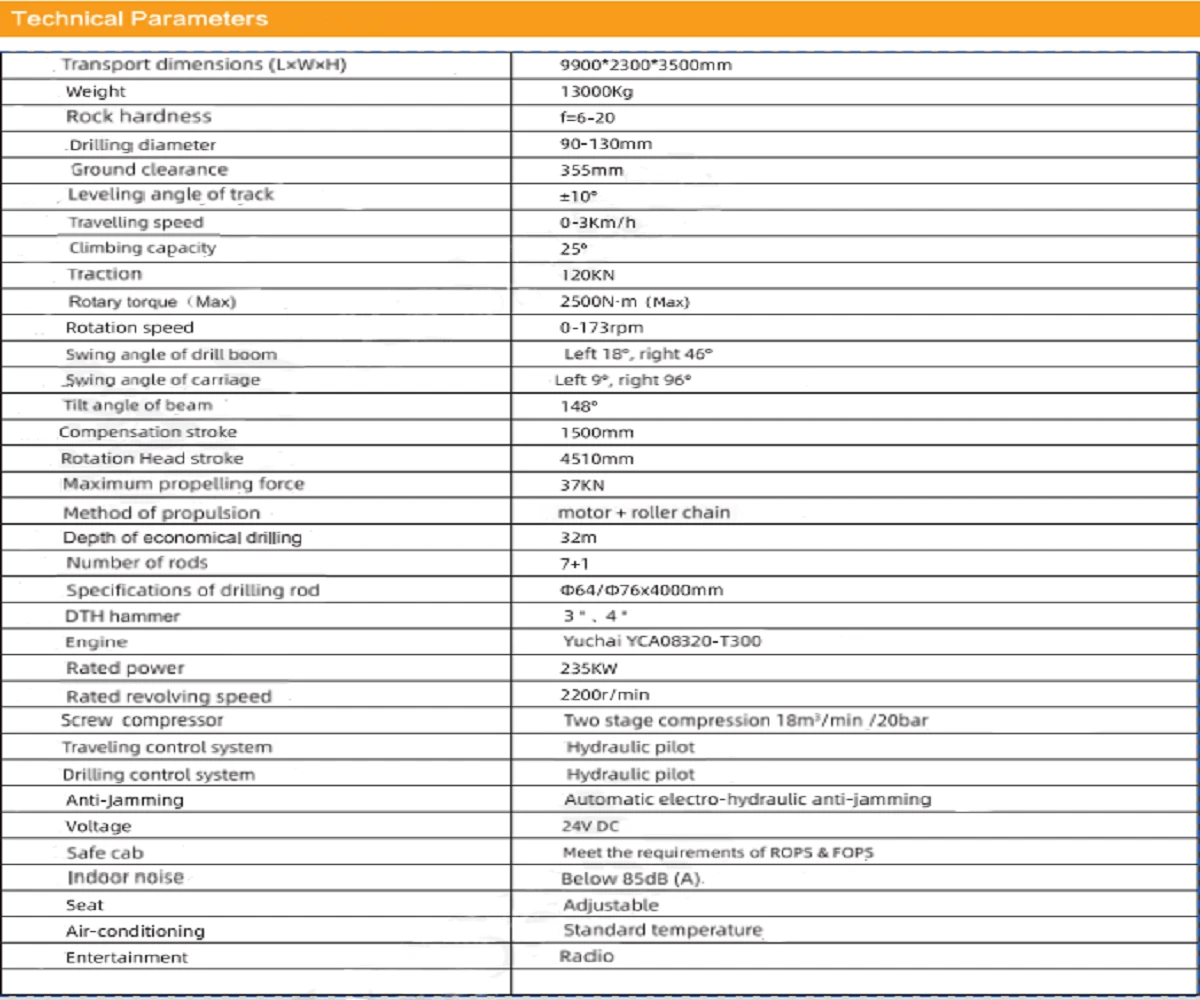
Technical Specifications
Typical Applications
- Ultra-deep municipal water supply wells: construction of large-diameter, high-yield production boreholes accessing deep confined aquifers at depths of 400 to 600 m in consolidated hard rock formations for city and regional water supply systems.
- Large-scale commercial and district geothermal systems: construction of deep, large-diameter vertical closed-loop heat exchange boreholes for district heating and cooling networks, large commercial buildings, and industrial process energy systems requiring depths beyond the ZT 10's 500 m envelope.
- Deep industrial and mining dewatering: construction of ultra-deep, large-diameter dewatering boreholes for deep open-pit mine water management, deep tunnel drainage, and large-scale industrial site groundwater control programs.
- Deep geotechnical investigation programs: borehole construction for deep rock sampling, in-situ stress measurement at depth, deep groundwater monitoring well installation, and seismic investigation programs on major infrastructure projects.
- Operations with strict operator welfare requirements: deep borehole drilling programs where enclosed ROPS/FOPS cabin protection, climate control, and dust filtration are mandated by site regulations, corporate HSE policies, or national drilling safety codes.
- Remote ultra-deep water supply programs: large multi-well drilling campaigns in remote areas with limited infrastructure, where the ZT 11's integrated dual-engine compressor and self-propelled crawler mobility provide complete operational independence at maximum depth capability.
Frequently Asked Questions
Q: How does the ZT 11 differ from the ZT 10, and when does the flagship model justify the investment?
A: The ZT 10 is a single-engine integrated rig with an open or canopy operator station, drilling to 500 m with 160 kW of power and a compressor delivering 18 to 30 m3/min at up to 35 bar. The ZT 11 adds five meaningful upgrades: a second dedicated 160 kW engine for the compressor (total 320 kW), raising compressor output to 20 to 35 m3/min at up to 40 bar with full independence from drilling hydraulic load; a fully enclosed ROPS/FOPS cabin with A/C, heating, and dust filtration; a maximum depth of 600 m; a higher pull-back force of 80 kN; standard casing advancement; and standard borehole data logging. The ZT 11 justifies the investment when your project requires depths beyond 500 m, enclosed cabin compliance, dual-engine compressor independence at depth, or the full combination of maximum ZT series capacity and premium operator environment.
Q: Why does the dual-engine architecture matter specifically for deep borehole drilling?
A: In single-engine integrated rigs, the engine must share its power output between the drilling hydraulics and the compressor simultaneously. During rod additions, mast repositioning, or chuck operations, hydraulic demand increases and compressor output drops. At shallow depths this is manageable, but at depths approaching 500 to 600 m, where the drill string is long and heavy and maintaining adequate hammer face pressure requires the compressor to operate near its rated output continuously, any reduction in compressor output directly reduces hammer performance and penetration rate. The ZT 11's dedicated compressor engine eliminates this entirely: the compressor runs at full rated output throughout every phase of the drilling cycle, regardless of what the drilling hydraulic system is doing, ensuring consistent hammer performance at maximum depth.
Q: What is the maximum practical depth for the ZT 11, and what limits it?
A: The ZT 11 is rated to 600 m with rod additions. The practical depth limit is determined by three factors: the compressor's ability to maintain sufficient hammer face pressure at depth (the ZT 11's 40 bar maximum and dedicated compressor engine provide significant headroom for deep-hole pressure losses); the hydraulic pull-back force available to extract the drill string from 600 m depth (80 kN, the highest in the ZT series); and the time required for rod addition and extraction cycles at maximum depth. For boreholes beyond 600 m, or in formations requiring air volumes above 35 m3/min at depth, a conventional rig with a larger external compressor would be the recommended solution. Our technical team can calculate the expected hammer face pressure at your target depth and formation to confirm suitability.
Q: Why is casing advancement standard on the ZT 11 rather than optional?
A: At the depths the ZT 11 is designed to drill (up to 600 m), the probability of encountering unstable overburden, water-bearing sands, fractured rock zones, or other formations that require casing support during drilling is significantly higher than at shallower depths. Making casing advancement standard reflects the ZT 11's positioning as a machine for the most demanding deep borehole applications, where the cost and schedule impact of a borehole collapse at 400 to 600 m depth is severe. Having the casing advancement system available as a standard feature means the operator can engage it immediately when unstable conditions are encountered, without waiting for an optional attachment to be sourced and fitted.
Q: What DTH hammer sizes are compatible with the ZT 11?
A: The ZT 11's compressor delivers 20 to 35 m3/min of free air delivery at working pressures up to 40 bar, which is sufficient to drive 5-inch to 8-inch DTH hammers at full rated performance. Compatible borehole diameters range from 150 mm to 450 mm depending on the hammer and bit combination selected. For high-pressure hammer applications above 35 bar, the ZT 11 is the recommended model in the ZT series. Our technical team can recommend the optimal hammer and bit specification for your target borehole diameter, depth, and rock hardness.
Q: How does the borehole data logging system work, and what does it provide?
A: The standard borehole data logging system records key drilling parameters at defined depth intervals (typically every 0.5 m or 1.0 m) throughout the full borehole depth: penetration rate, rotation speed, feed force, compressor working pressure, and both engine load readings. This data is stored on an on-board memory card and can be exported after each borehole for quality assurance documentation, geological interpretation, and project reporting. The penetration rate log is particularly valuable for water well and geothermal projects, as it provides a continuous record of formation hardness variation with depth that can be correlated with the geological profile to identify aquifer zones, fractured rock intervals, and formation boundaries without requiring separate geophysical logging.
Q: What are the transportation and mobilization requirements for the ZT 11?
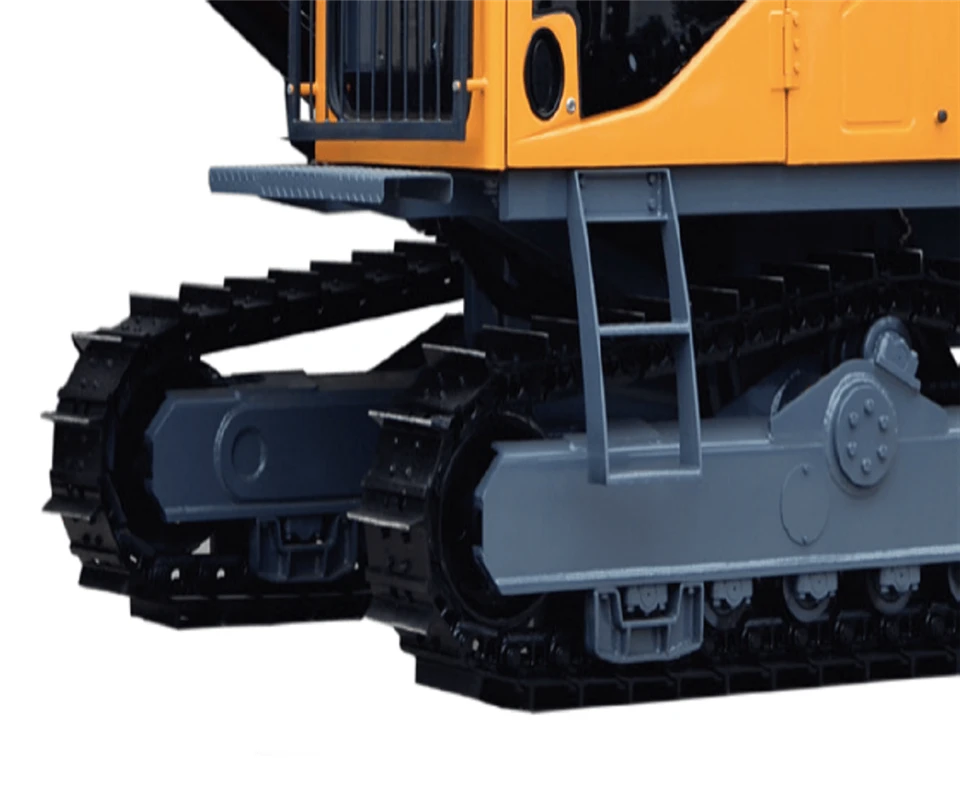
A: With an operating weight of approximately 24,000 kg, the ZT 11 requires a heavy-duty low-bed trailer rated for 26 tonnes or above; standard heavy-duty low-bed trailers are suitable in most markets without special permits. As a single integrated machine, mobilization requires only one trailer and one loading operation, significantly reducing logistics time and cost compared to a conventional rig-plus-compressor two-unit deployment. On-site, the rig self-trams between borehole locations at up to 2.3 km/h. For international export, the machine is shipped as break-bulk cargo or on a heavy flat-rack, with full export documentation including ROPS/FOPS certification provided.
Q: What after-sales support and service infrastructure do you provide for ZT 11 deployments?
A: We provide comprehensive after-sales support through a dedicated international service engineering team. Standard wear parts (drill bits, shank adapters, hammer components, engine and compressor consumables, track components, hydraulic seals, cabin air filters) are held in stock for dispatch within 24 to 72 hours. Major structural, hydraulic, and powertrain components carry a lead time of 7 to 20 business days depending on destination. On-site commissioning, operator training, and periodic maintenance inspections are available as part of our service packages. For large multi-well project deployments, a resident service engineer can be arranged for the duration of the drilling program. Remote technical support via video call is available for urgent operational issues at any time.
Inquiry & After-Sales Support
For technical consultations, project-specific quotations, or tooling package inquiries, please contact our international sales engineering team. To receive the most accurate and timely proposal, please provide the following information:
- Target borehole diameter and maximum required depth
- Geological profile (overburden thickness, rock type, estimated UCS, groundwater depth)
- Application type (water well, geothermal, ground investigation, dewatering)
- Number of boreholes and project timeline
- Site location, climate conditions, terrain description, and access constraints
- Applicable operator protection and HSE regulatory requirements
- Preference for ZT 10 or ZT 11 configuration, or request for model selection guidance
Hot Tags: surface rock drill rig, China surface rock drill rig manufacturers
Previous
Surface Rock Drilling RigYou Might Also Like

Send Inquiry