1. Introduction to Mining and Water Well Drilling Equipment
Mining and water well drilling equipment plays an essential role in modern industrial development, infrastructure construction, mineral exploration, and groundwater resource utilization. With the increasing demand for mineral resources, clean water supplies, and efficient construction technologies, advanced drilling machinery has become increasingly important across various industries.
Mining drilling equipment is primarily designed for penetrating hard rock formations, creating blast holes, conducting geological exploration, and supporting underground mining operations. Water well drilling equipment, on the other hand, is specifically developed to access underground water resources for agricultural irrigation, residential water supply, industrial production, and municipal water projects.
Modern drilling systems consist of several important components, including drilling rigs, down-the-hole (DTH) hammers, drill bits, drill pipes, air compressors, and other drilling accessories. Each component performs a specific function, and their compatibility directly affects drilling efficiency, operational stability, and equipment service life.
2. Main Types of Drilling Equipment
Different drilling projects require different machinery depending on geological conditions, drilling depth, hole diameter, and operational requirements.
2.1 Mining Drilling Rigs
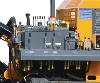
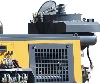
Mining drilling rigs are widely used in open-pit mining, underground mining, quarrying, tunneling, and rock excavation projects. These machines are designed to penetrate hard rock formations and create accurate boreholes for blasting, exploration, and other mining operations.
Common types include crawler-mounted DTH drilling rigs, hydraulic top hammer drilling rigs, and rotary drilling rigs.
Crawler-mounted drilling rigs provide excellent mobility and stability on rough terrain. DTH drilling rigs are particularly suitable for hard rock formations and deep-hole applications, while top hammer drilling equipment is frequently used for smaller-diameter drilling operations.
2.2 Water Well Drilling Rigs
Water well drilling rigs are specialized machines used to construct boreholes for groundwater extraction. They are commonly applied in agricultural irrigation, residential water supply, industrial water projects, and rural infrastructure development.
Depending on geological conditions, water well drilling rigs can operate using air rotary drilling, mud rotary drilling, or down-the-hole drilling technology.
For hard rock formations, DTH drilling systems offer an effective solution by combining rotational movement with repeated pneumatic impact. For softer and less consolidated formations, mud rotary drilling may be more suitable because drilling fluid helps transport cuttings and maintain borehole stability.
2.3 Air Compressors for Drilling Operations
Air compressors are essential supporting equipment for pneumatic drilling systems. They provide compressed air to operate DTH hammers and help remove rock cuttings from boreholes.
In water well and mining applications, high-pressure diesel screw air compressors are commonly used because they provide a reliable compressed air supply in remote working environments.
When selecting an air compressor, operators should consider working pressure, air delivery capacity, drilling depth, hammer specifications, and geological conditions.
3. Essential Drilling Tools and Accessories
In addition to the main drilling machinery, high-quality drilling accessories are necessary for maintaining efficient and stable operations.
3.1 Down-the-Hole (DTH) Hammers
A DTH hammer is a pneumatic impact tool installed at the bottom of the drill string. It uses compressed air to drive an internal piston, which repeatedly strikes the drill bit and breaks hard rock formations.
DTH hammers are widely used in mining, quarrying, water well drilling, geothermal drilling, and construction projects.
Different hammer models are designed for different hole diameters and operating pressures. Choosing the appropriate hammer can help improve penetration performance and reduce unnecessary equipment wear.
3.2 DTH Drill Bits
DTH drill bits are cutting tools connected to the front end of DTH hammers. They typically feature tungsten carbide buttons that crush and fracture rock through repeated impact.
Common button configurations include spherical, ballistic, and semi-ballistic designs. Different button shapes are suitable for different rock formations and drilling conditions.
The selection of drill bits should consider rock hardness, abrasiveness, hole diameter, flushing requirements, and drilling method.
3.3 Drill Pipes and Drill Rods
Drill pipes connect the drilling rig with downhole tools and transmit rotational torque, axial force, and compressed air during drilling operations.
High-quality drill pipes are generally manufactured from durable alloy steel and designed to withstand considerable mechanical stress, vibration, and abrasive working conditions.
Proper thread compatibility and regular inspection are important for ensuring reliable connections and reducing the risk of premature failure.
3.4 Other Drilling Accessories
Other commonly used drilling accessories include drill pipe adapters, couplings, stabilizers, casing systems, reamers, and various spare parts.
These components help improve drilling system compatibility, maintain borehole dimensions, and support continuous operation under demanding working conditions.
4. How to Choose the Right Drilling Equipment
Selecting appropriate drilling equipment is an important factor in achieving efficient and cost-effective drilling operations.
Several factors should be evaluated before purchasing equipment:
Geological Conditions: Identify whether the formation consists of soft soil, clay, sandstone, limestone, granite, or other hard rock materials.
Drilling Depth: Select equipment with sufficient drilling capacity and suitable drill pipe specifications.
Hole Diameter: Ensure that the drilling rig, DTH hammer, and drill bit are compatible with the required borehole diameter.
Air Pressure and Flow: Match the air compressor output with the operating requirements of the pneumatic hammer.
Equipment Durability: Consider material quality, manufacturing processes, wear resistance, and maintenance requirements.
Compatibility: Ensure that all drilling components work together as an integrated system.
A properly configured drilling system can improve penetration efficiency, reduce downtime, and help control overall project costs.
5. Maintenance Tips for Drilling Machinery
Regular maintenance is essential for extending equipment service life and maintaining consistent drilling performance.
Operators should inspect drill bits, hammers, drill pipes, and threaded connections before and after operations. Worn carbide buttons, damaged threads, and abnormal hammer components should be repaired or replaced when necessary.
Air compressors should also receive regular maintenance, including filter replacement, lubricant inspection, cooling system checks, and drainage of accumulated moisture.
In addition, proper lubrication, correct operating pressure, and suitable drilling parameters can help reduce mechanical wear and prevent unexpected equipment failures.
6. Applications Across Different Industries
Mining and water well drilling machinery serves a wide range of industrial applications, including:
Open-Pit Mining: Drilling blast holes for mineral extraction and rock fragmentation.
Underground Mining: Creating blast holes and supporting underground excavation projects.
Quarrying: Drilling holes for stone extraction and controlled blasting.
Water Well Construction: Accessing groundwater for agricultural, residential, and industrial use.
Geological Exploration: Collecting geological information and investigating underground formations.
Geothermal Drilling: Creating boreholes for geothermal energy systems.
Construction Engineering: Supporting foundation drilling, anchoring, and other ground engineering operations.
7. Conclusion
Mining and water well drilling equipment forms the foundation of efficient drilling operations across multiple industries. From drilling rigs and air compressors to DTH hammers, drill bits, and drill pipes, every component contributes to the overall performance of a drilling system.
Understanding equipment functions, selecting suitable drilling tools, and implementing regular maintenance procedures can significantly improve operational efficiency and reduce long-term costs.
For drilling contractors, mining companies, construction enterprises, and water well service providers, choosing reliable machinery and compatible accessories is essential for achieving stable and productive drilling operations.