When I started as a drill pipe supplier a decade ago, I’d often get calls from project managers who’d buy the first pipe size they saw, only to return a week later frustrated because it didn’t hold up mid-drill. The problem wasn’t always that they’d chosen the wrong type of pipe—it was that they skipped the critical step of calculating exactly what size their project actually needed. After working with hundreds of drilling teams across water wells, trenchless pipelines, and downhole exploration, I’ve learned that determining drill pipe size isn’t guesswork; it’s a mix of technical specs, on-site conditions, and matching the right product to your task. Today, I’m breaking down how to nail this calculation, so your next drill goes off without a hitch.
Start With Your Project’s Core Purpose
The first question to ask yourself isn’t “what size drill pipe is cheap?” It’s “what am I drilling, and how deep do I need to go?” Different drilling applications demand vastly different pipe sizes, and choosing the wrong base type will derail even the most well-planned project. For example, if you’re working on a municipal water well that needs to reach 500+ feet of bedrock, a narrow, flexible pipe won’t have the torque to twist through granite. But if you’re doing trenchless horizontal drilling for a gas line under a road, too large a pipe will add unnecessary weight that bogs down your rig.
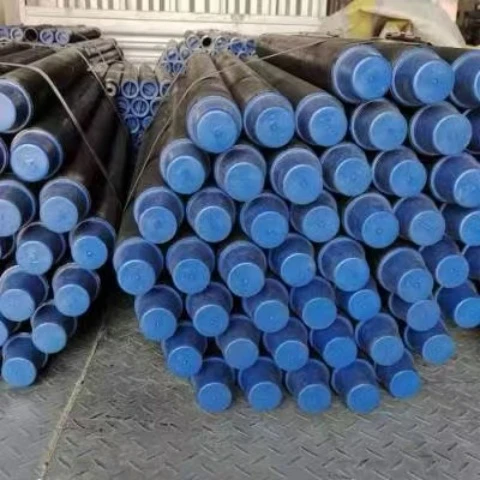
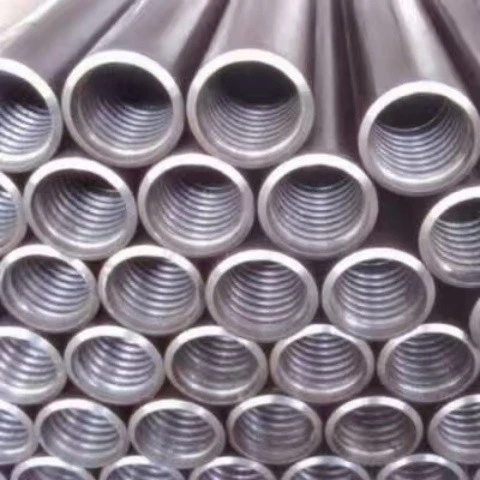
Let’s map this to the products we supply. For water well projects, most teams reach for Well Drilling Rod when they need consistent, corrosion-resistant pipe sized for standard well depths. These rods are available in diameters from 2 3/8 inches up to 4 1/2 inches, each calibrated for specific drilling torque requirements. For trenchless pipeline projects, though, you’ll want Pipeline Trenchless Drill Rod, which are designed to handle the high lateral forces of horizontal directional drilling (HDD) and come in sizes from 3 1/8 to 5 inches. If you’re working in mineral exploration or downhole water testing, Downhole Water Exploration Drill Pipe offers smaller, precision-sized sections that make it easy to pull samples without extra bulk. Each of these product lines has built-in size ranges tailored to their use case, but even within those ranges, you need to dig deeper.
Calculate Your Rig’s Torque and Tension Limits
This is the technical part that most DIY project managers miss—and it’s where I’ve seen the most mistakes happen. Drill pipe doesn’t just drill through rock; it has to withstand two main forces: torque (the twisting force that spins the bit) and tension (the weight of the pipe hanging down the hole, plus the force pulling it back up). If your pipe size is too small, it will bend under tension or snap under torque mid-drill, causing costly downtime and even stuck pipe incidents that take days to fix.
Let’s break down the math (I’ll keep this simple, promise): Torque required is a function of the bit diameter, the formation hardness, and the depth. The formula for minimum pipe torque capacity is something like Torque = (Bit Diameter × Formation Hardness × Depth) / Safety Factor, where safety factor is usually 1.5 to 2 (a buffer to avoid failure). For tension, the rule is that the pipe’s tensile strength (the amount of weight it can hold without stretching permanently) must be at least 1.25 times the total weight of the pipe plus any drilling fluids inside.
Here’s a real example: Last year, a team working on a 600-foot water well called me because their 2 7/8-inch pipe kept snapping at 450 feet. We checked their calculations: their drill rig produced 10,000 ft-lbs of torque, and their pipe only had an 8,000 ft-lb capacity. Upgrading to a 3 1/2-inch Well Drilling Rod gave them a 12,000 ft-lb capacity, and they finished the well without issues. For larger projects, like mine raise drilling (used in underground mining to create vertical access shafts), Raise Drilling Rig Drill Pipe comes in heavy-wall sizes up to 10 inches, built to handle the extreme tension of lowering large drill bits 1,000+ feet underground.
Account for Hole Diameter and Clearance
Another often-overlooked factor is the hole diameter you need to drill. The drill bit size is always larger than the outer diameter (OD) of the drill pipe, but the gap between the pipe OD and the hole wall matters for two reasons: drilling fluid flow and pulling the pipe back up. If your pipe is too large for the hole, drilling fluid can’t circulate properly to carry cuttings to the surface, leading to clogged holes and stuck pipe. If it’s too small, you’re wasting money on pipe that doesn’t fill the rig’s capacity, and you might even compromise the hole’s stability.
For example, if you’re drilling a 10-inch water well, your pipe OD should be about 6 inches (half the bit diameter) to leave enough space for drilling mud to flow. For trenchless HDD projects, the clearance gap is even more important because the pipe has to bend around curves under the ground. A 4-inch Pipeline Trenchless Drill Rod has a tighter bend radius than a 5-inch one, which is better for projects with sharp horizontal turns, like crossing under a busy highway. I always tell teams: measure your required hole diameter first, then pick a pipe OD that’s 30-50% of that, depending on the drilling method. For square drill pipe, which is used for high-torque rotary drilling in soft formations, Water Well Square Drill Pipe comes in 3 1/2 and 4 1/2-inch sizes, designed specifically to maximize torque transfer without the round pipe’s risk of slipping in the rotary drive.
Factor in Depth and Formation Type
Depth and ground conditions are like the foundation of your size decision. Shallow projects (under 100 feet) can get away with smaller, lighter pipe, but deep projects (over 500 feet) need larger, thicker-walled pipe because the weight adds up fast. A 10-foot section of 2 7/8-inch pipe weighs around 20 pounds, so by 500 feet, that’s 1,000 pounds of pipe hanging on the rig—enough to snap a pipe that’s sized for shallow depths.
Formation type is equally critical. Soft soil or sand (called unconsolidated formations) needs smaller pipe because there’s less torque, while hard rock (granite, limestone) needs larger, thicker-wall pipe to handle the abrasive force of the bit. Last quarter, a mining team came to us with a project to drill 800 feet of granite for a test well. They initially ordered 3 1/2-inch pipe, but after testing, we realized they needed 4-inch Downhole Water Exploration Drill Pipe with extra wall thickness to resist wear from the hard rock. The extra $200 in pipe size upgrade saved them from having to re-drill the hole when their original pipe wore out at 400 feet. For deep raise drilling projects, Raise Drilling Rig Drill Pipe uses ultra-heavy wall steel and larger diameters to handle the combined forces of depth and hard rock, with pressure ratings up to 10,000 PSI.
Don’t Forget Compatibility With Your Rig and Accessories
Even if you calculate all the technical specs, your drill pipe size has to fit your existing equipment. Threaded connections, rotary drives, and subs (the parts that connect pipe sections) are built for specific pipe sizes. A common mistake is buying a pipe that’s too big for your rotary drive’s grip—you’ll end up with the pipe slipping during drilling, which damages both the pipe and your rig.
For example, many entry-level water well rigs use rotary drives that only accept 2 7/8 or 3 1/2-inch pipe, so you can’t force a 4-inch pipe onto it without upgrading the drive, which is far more expensive than just choosing the right size. Our team always asks potential customers to send over their rig model number before recommending a pipe size, because compatibility trumps all other factors. If you’re unsure, our product pages are a great start: Well Drilling Rod has a compatibility guide for all major water well rig brands, while Pipeline Trenchless Drill Rod lists compatible HDD rig models for every size.
Common Pitfalls to Avoid
After years in this industry, I’ve seen the same mistakes over and over. The first is “over-sizing” pipe to avoid problems. Buying a pipe that’s larger than needed adds unnecessary weight, increases rig fuel costs, and can even make it harder to navigate tight turns or small holes. The second is under-sizing, which we already talked about—snapped pipe, stuck holes, and lost time. The third is ignoring corrosion. If you’re drilling in saltwater or acidic groundwater, you’ll need a thicker-walled pipe of a specific alloy, even if the torque and tension specs say a thinner wall works. Last year, a coastal water well project tried a standard 3-inch Well Drilling Rod but found the saltwater corroded the pipe in 6 months; switching to a 3 1/2-inch stainless steel version solved the problem, and the larger diameter provided better corrosion resistance due to the thicker wall.
Next Steps for Your Project
Determining the right drill pipe size doesn’t have to be complicated, but it does require taking the time to assess your project’s purpose, depth, formation type, rig compatibility, and forces like torque and tension. If you’re still unsure after going through these steps, the best next move is to reach out with your project details. Our team has decades of experience working with water well drilling, trenchless pipelines, downhole exploration, and mining projects, and we’ll help you pick the exact pipe size and type that fits your needs—whether that’s Pipeline Trenchless Drill Rod for a HDD line, Well Drilling Rod for a municipal well, Water Well Square Drill Pipe for soft rotary drilling, Downhole Water Exploration Drill Pipe for exploration work, or Raise Drilling Rig Drill Pipe for mining raises.
Don’t let the wrong drill pipe size derail your project. Get in touch with our team to discuss your requirements, and we’ll make sure you have the right pipe to finish on time and on budget.
References
- Drilling Engineering: A Complete Well Planning Approach, 2nd Edition. John M. Campbell Publishing, 2015.
- Horizontal Directional Drilling (HDD) Design and Installation Guidelines. American Society of Civil Engineers, 2017.
- Raise Drilling Operations: Safety and Technical Standards. International Council on Metals and Minerals, 2020.
- Drill Pipe Material and Size Selection for Water Wells. National Ground Water Association, 2019.