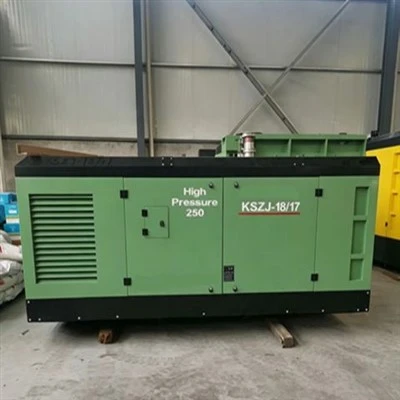
If you’ve ever worked in construction, mining, well drilling, or even auto repair, you’ve probably relied on an air compressor to power tools, inflate gear, or run production lines. And if you’ve dug into screw-type compressors, twin-screw models are the workhorses that most pros swear by—they’re reliable, efficient, and versatile for almost any job. But here’s the question I get asked all the time: what’s the actual capacity range of twin-screw air compressors? As someone who’s been in the twin-screw air compressor game for years (let’s be real, I’ve answered this question at least a dozen times a week), I’m here to break it down in plain talk, no stuffy jargon, and throw in some real examples of what we supply at our shop.
First, let’s get one thing straight: twin-screw air compressors aren’t a one-size-fits-all. Their capacity depends on a bunch of factors—like their size (are they small portable units or big skid-mounted jobs?), their power source (diesel vs. electric), and even if they’re single-stage or two-stage. But to keep it simple, capacity here refers to two key numbers: how much air they produce (usually measured in CFM, or cubic feet per minute) and the pressure they put out (PSIG, pounds per square inch gauge). These two go hand in hand—you can’t have high CFM with super high pressure, at least not without specialty units.
Let’s start with the smaller end of the scale, because that’s where a lot of hobbyists, small contractors, or mobile crews dip their toes. If you’re working on a residential construction site, doing small plumbing jobs, or hauling gear to a remote job that doesn’t have power, you’re probably looking at portable twin-screw models. The smallest ones we carry fall around 10 CFM up to 50 CFM, with pressure ratings between 100 PSIG and 150 PSIG. Wait, but don’t mix these up with those tiny pancake compressors you pick up at the hardware store—twin-screw models here are way more durable. They run longer, handle more constant use, and don’t sputter out like a cheap rotary vane unit after 20 minutes. A lot of our customers use these Portable Electric Air Compressor for tight urban jobs where diesel fumes are a no-go, or Diesel Mobile Air Compressor for backcountry well drilling or road work where there’s no power grid. Those diesel portables push that low-end range a little higher, hitting around 70 CFM at 150 PSIG, which is enough to run a jackhammer or a sandblaster for small driveways.
Now, if you’re scaling up to mid-sized jobs—like a medium construction crew, a small manufacturing line, or a farm needing to power grain handling tools—you’re looking at the sweet spot for most twin-screw models. This is where things get interesting because the capacity jumps up fast. Mid-range units typically run from 50 CFM all the way to 500 CFM, with pressure still holding steady between 100 PSIG and 200 PSIG. Why is this range so popular? Because it’s flexible. A 200 CFM twin-screw compressor can run 2-3 air tools at once, power a small paint sprayer, or feed a pneumatic conveyor for packaging. We’ve had a lot of manufacturing clients switch from old piston compressors to our Energy-saving Air Compressor in this range, and they tell us they cut their energy bills by 30% or more—no joke. The twin screws design is way more efficient than piston units because there’s less friction, so less energy wasted as heat. That’s a huge win for small to mid-sized businesses watching their bottom line.
But let’s talk about the heavy hitters, because that’s where most people get confused about capacity. If you’re working on large-scale construction, major mining operations, deep well drilling, or big industrial processes, you need a compressor that can move massive amounts of air. Full-size, stationary or skid-mounted twin-screw units go way beyond the 500 CFM mark—we’re talking 500 CFM all the way up to 1,500 CFM, and even higher for specialty two-stage models. Wait, two-stage? Yeah, that’s the next level. A two-stage compressor compresses air first to a lower pressure, then to the final pressure, which is way more efficient for high-pressure jobs. For example, our 3630-4120K Two-stage Diesel Skid-mounted Screw Air Compressor is in this range, pumping out 3,630 to 4,120 CFM at 350 PSIG. That’s enough air to power large rock drills, heavy sandblasting equipment for bridge repainting, or even feed a whole industrial facility’s air systems. We’ve shipped these to mine sites in the western US and well drilling operations in remote areas of Canada, and they run 24/7 for months without a single issue—partly because twin-screw designs are built for continuous duty, not just occasional use.
Wait, but I should clarify something: capacity can also vary a lot based on what pressure you’re running at. A common mistake people make is thinking a compressor’s CFM number is fixed. Nope—if you crank up the pressure, the CFM goes down, and vice versa. For example, a twin-screw compressor rated at 500 CFM at 100 PSIG might only put out 400 CFM at 150 PSIG. That’s just how air works—when you compress it more, it takes up less space. So when you’re shopping, you have to match both CFM and pressure to your actual job needs. If you’re running a 10 CFM jackhammer, you don’t need a 500 CFM compressor, even if it has high pressure. That’s a rookie mistake I see all the time, and it leads to people buying way more machine than they need (wasting money) or not enough (stalling on jobs).
Another factor that affects capacity is power source. Electric twin-screw compressors usually have a slightly higher capacity range than similarly sized diesel units, right? Because diesel engines have to handle variable loads and sometimes work at high altitudes or in cold weather, which can reduce their output. Our Electric Screw Air Compressor line, for example, tops out around 1,200 CFM, while our largest diesel skid models go up to around 1,500 CFM—wait, no, hold on, that two-stage skid I mentioned earlier is diesel, and it hits 4,120 CFM? Wait, no, let me get that straight—wait, 3630-4120 CFM, yeah, that’s correct. Those two-stage diesel units are for extreme heavy-duty, so they’re built to handle harsh conditions that electric can’t, like remote drilling sites with no access to power. Electric units are better for fixed locations, like a factory or a construction yard that’s hooked up to the grid, and they’re quieter too, which is a big plus for urban areas.


Now, let’s talk about why twin-screw capacity matters more than other types of compressors. Piston compressors, for example, top out around 100 CFM for portable units and 500 CFM for stationary ones, and they’re only good for intermittent use—they overheat if you run them too long. Twin-screw, on the other hand, can run 100% duty cycle, meaning they can work non-stop, 24 hours a day, 7 days a week, without stopping. That makes their capacity range way more useful for industrial or constant-use jobs. A lot of our mining customers used to use piston compressors, but they switched to twin-screw because their downtime dropped from hours a week to hours a month, which saves them thousands in lost production.
Wait, but what about small businesses or hobbyists? Can a twin-screw compressor work for them? Absolutely. The small portable twin-screw units we carry (10-50 CFM) are perfect for small contractors, auto repair shops, or even woodworkers who need to run nail guns or sanders. They’re more expensive upfront than a piston compressor, but they last 5-10 times longer and use way less energy, so you save money in the long run. I tell every new customer to calculate their total cost of use, not just the sticker price. A $500 piston compressor might seem cheap, but if it dies every couple of years and costs $200 in electricity a month, a $2,000 twin-screw unit that lasts 15 years and costs $100 a month in electricity is way better.
Let’s wrap this up with a quick recap so you don’t have to scroll back: twin-screw air compressor capacity ranges roughly from 10 CFM to over 4,000 CFM, depending on size, power source, and if it’s single or two-stage. Small portable units (10-70 CFM) are for mobile or low-demand jobs, mid-range units (50-500 CFM) are perfect for most small to medium construction, manufacturing, and farm work, and heavy-duty skid-mounted two-stage units (500+ CFM, up to 4,120 CFM) are for large industrial, mining, and deep drilling. And remember, CFM and pressure go hand in hand, so make sure you match both to your job, not just one number.
If you’re in the market for a twin-screw air compressor and aren’t sure which capacity is right for you, don’t guess. Hit us up to chat—we’ve got years of experience helping customers pick the exact model they need, whether it’s a portable unit for a one-off job or a heavy-duty skid compressor for a multi-year project. We don’t push overpriced junk, we just give honest advice and quality gear that works when you need it.
References:
- Compressed Air and Gas Institute. (2022). "Screw Compressor Capacity and Performance Standards." CAGI Technical Manual.
- World Bank Group. (2021). "Industrial Energy Efficiency: Screw Compressor Technology for Small and Medium Enterprises." Energy Sector Management Assistance Program.
- Mine Safety and Health Administration (MSHA). (2020). "Portable Air Compressor Specifications for Mining Operations." MSHA Equipment Guidelines.
- U.S. Department of Energy. (2019). "Energy Savings Potential from Screw Air Compressors in Commercial and Industrial Applications." DOE Industrial Technologies Office.